The short answer is yes. Cenote diving can be completely safe for beginners, as long as strict protocols are followed, training limits are respected and professional local guides lead the way. In this article, we go through all the key points to make sure your first underground dive is an unforgettable and safe experience from start to finish.
Understanding the risks: cavern diving, not cave diving
When we talk about cenote diving, there are three very different activities: snorkeling, cavern diving and cave diving. For beginners, safety comes first, which means only guided cavern dives.
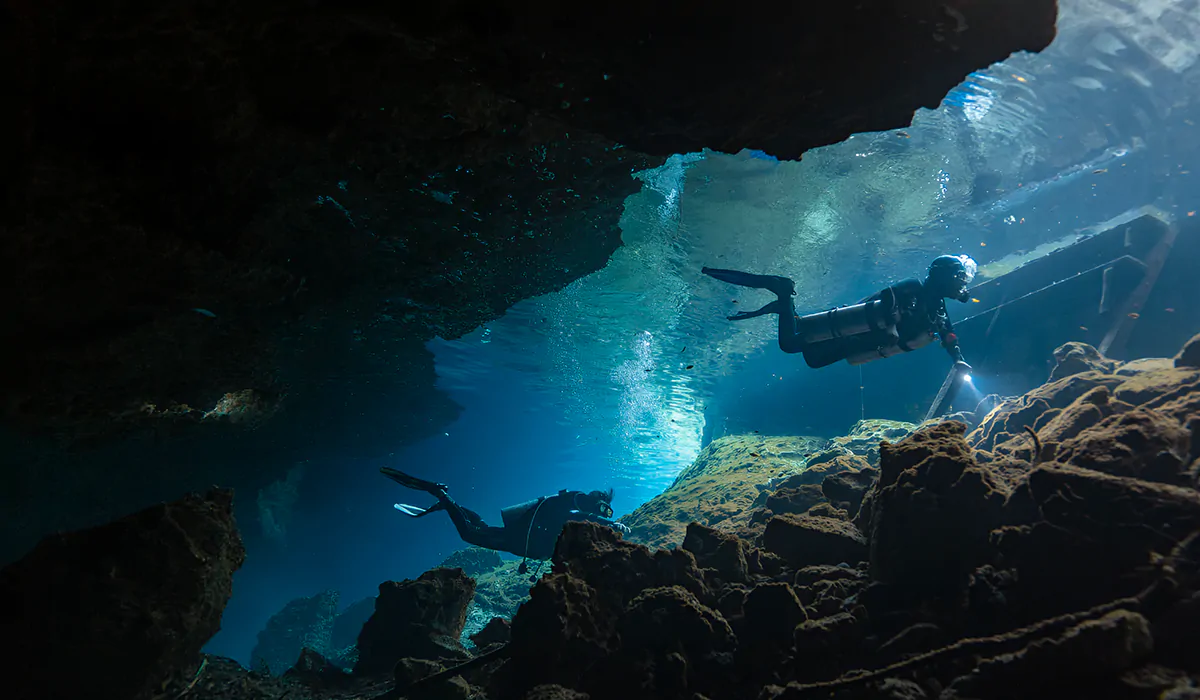
- The daylight rule: in cavern diving, you always stay within sight of the entrance and the natural daylight, never more than about 60 meters (200 feet) from the surface in a straight line. This removes the feeling of being shut in and guarantees a clear, direct way out at all times.
- Depth and space limits: the cavern routes open to visitors and new divers are usually wide, well lit by the sunbeams and quite shallow, often around 10 to 15 meters (33 to 50 feet). This makes buoyancy control much easier.
Certification and experience: what you need
To make your first cenote dives safe, local rules and the training agencies set clear standards that every diver must meet before getting in the water.
- Minimum certification: an Open Water certification (PADI, SSI, SDI/TDI or other recognized agencies) lets you dive the cavern zones of the cenotes with a guide. That said, the most professional dive centers in the Riviera Maya recommend an Advanced Diver certification or, at the very least, very good control of your buoyancy.
- The role of the certified guide: in the cenotes, the dive must be led by a guide certified for cavern and cave diving, with very small groups, usually a maximum of four divers per guide. The guide chooses the route, carries the safety equipment and makes sure the dive stays safe at all times.
The golden rules and equipment for diving under the jungle
Unlike ocean diving, where currents and waves are the main things to watch, cenote diving has its own technical and environmental challenges. To keep everyone safe, dive centers follow strict rules that you should know:
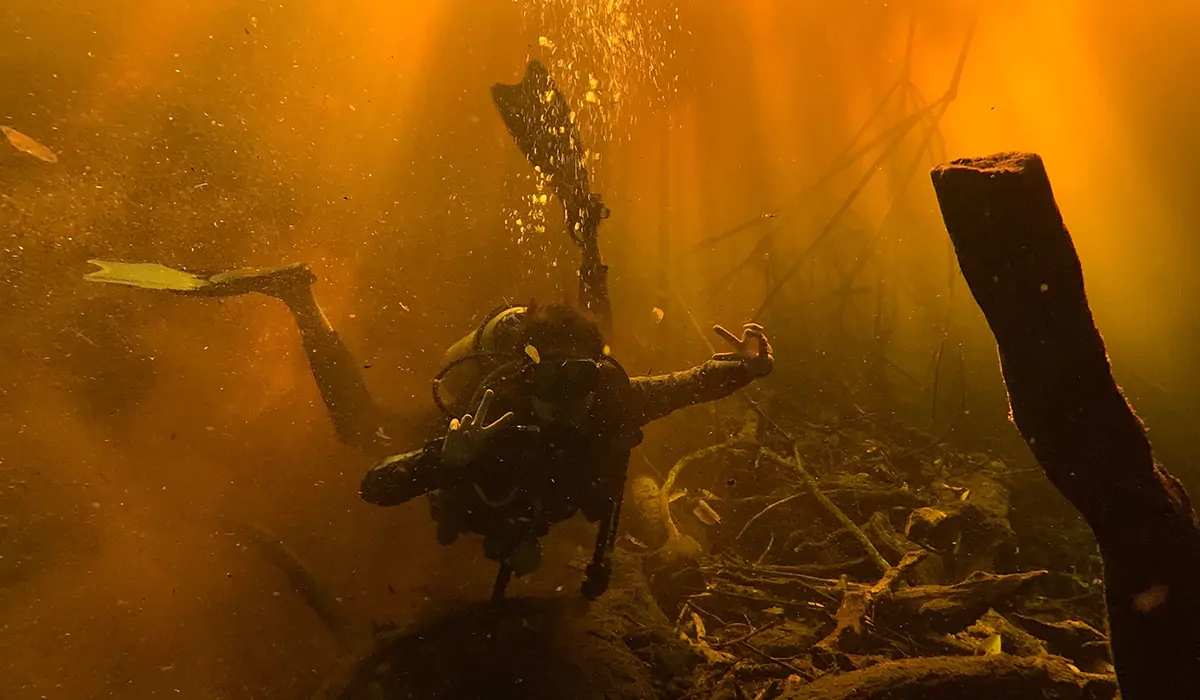
- Never touch the bottom: cenotes have stalactites and stalagmites that took thousands of years to form, and a very delicate layer of silt. Stirring up the sediment ruins the visibility instantly. Good buoyancy is the foundation of safe cenote diving.
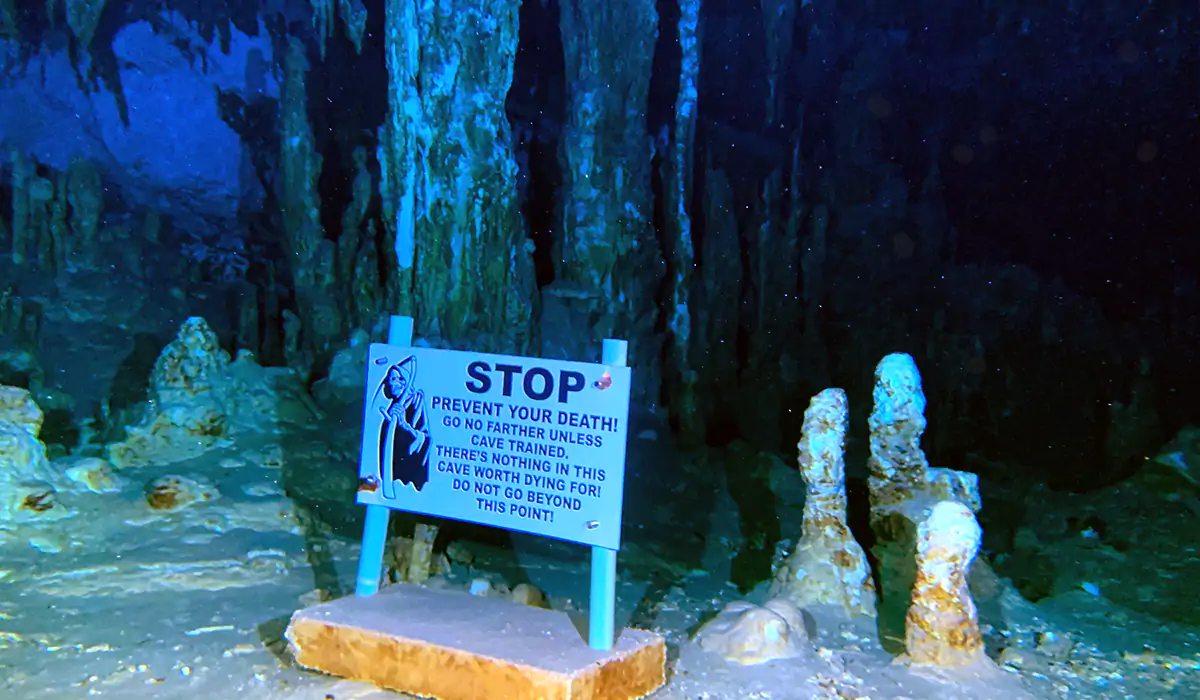
- Follow the guideline: cavern routes have a permanent guideline. Always stay along it with your guide, and never try to explore dark side passages.
- Streamlined equipment: divers often use shorter fins to avoid hitting fragile rock, and a clean equipment setup with nothing hanging that could catch on the formations.
Common fears of beginners, and how to feel calm
It’s completely normal to feel a little nervous the first time you look over the dark edge of a Mayan cenote. Claustrophobia and fear of the unknown are natural reactions. To feel safe in body and mind, instructors recommend:
- A warm-up dive: many dive centers suggest a first dive on a reef along the coast, in Playa del Carmen or Cozumel, to check your weighting and test your equipment before diving in fresh water.
- Talk to your guide: tell your guide about any worries before the dive and agree on the signals you’ll use. Once you’re in, the visibility, which can exceed 100 meters thanks to the water filtered through the limestone, helps calm the nerves: you can see the bottom, the light and the exit with total clarity.
Practical tips for planning your trip
Wherever you’re traveling from, keep these tips in mind for a safe, stress-free trip:
- Dive insurance: make sure your dive insurance (DAN, Divers Alert Network, or another dive insurer) specifically covers cavern or cenote diving.
- Water and rest: the tropical climate of Yucatán and the physical effort of diving mean you need to drink plenty of water and avoid late nights before your dive days.
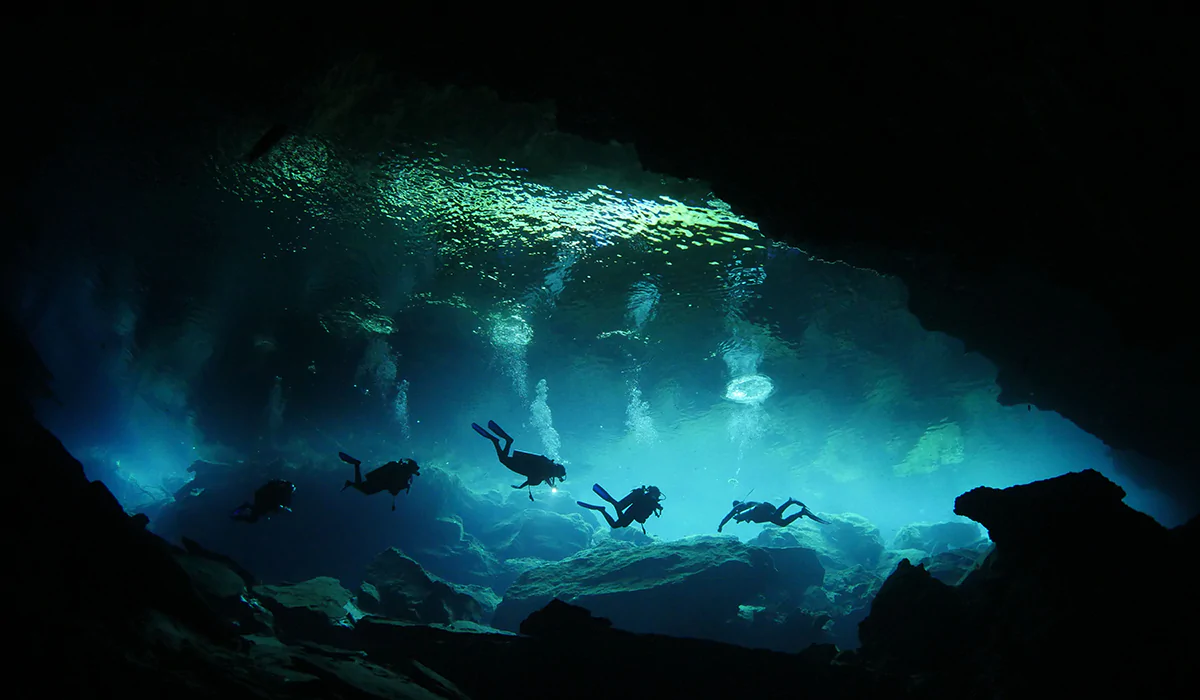
Your first step into the underground world
In the end, whether cenote diving is right for beginners comes down to this: caution and good training are your best allies. Diving safely doesn’t mean giving up the adventure. It means enjoying it with maximum safety, guided by experts who know every corner of these sacred freshwater temples.
A final thought: respecting nature and your own limits as a diver is the key that opens the door to the most stunning places on the planet, without ever putting your safety at risk.
If this guide has made you feel ready to take the plunge, and you’d like to plan your first cenote dive with qualified instructors who adapt the pace to your level, discover our cenote dives, book your first cenote divebook your first cenote dive or contact us with any question.