In this guide, we explain why exceptional diving visibility is a year-round reality in the Mayan underworld: the science behind it, the small seasonal changes and practical tips for every diver who wants to experience perfect clarity.
The science behind the visibility in the cenotes
To understand why divers rave about the crystal-clear water of Quintana Roo, we first need to look at the unique geology of the region. The Riviera Maya sits on a huge, porous limestone platform with almost no rivers on the surface.
- Natural filtration: when tropical rain falls on the jungle, the water slowly seeps down through the limestone. The rock acts like a giant, ultra-fine natural filter, trapping organic matter, sediment and impurities before the water reaches the underground caves.
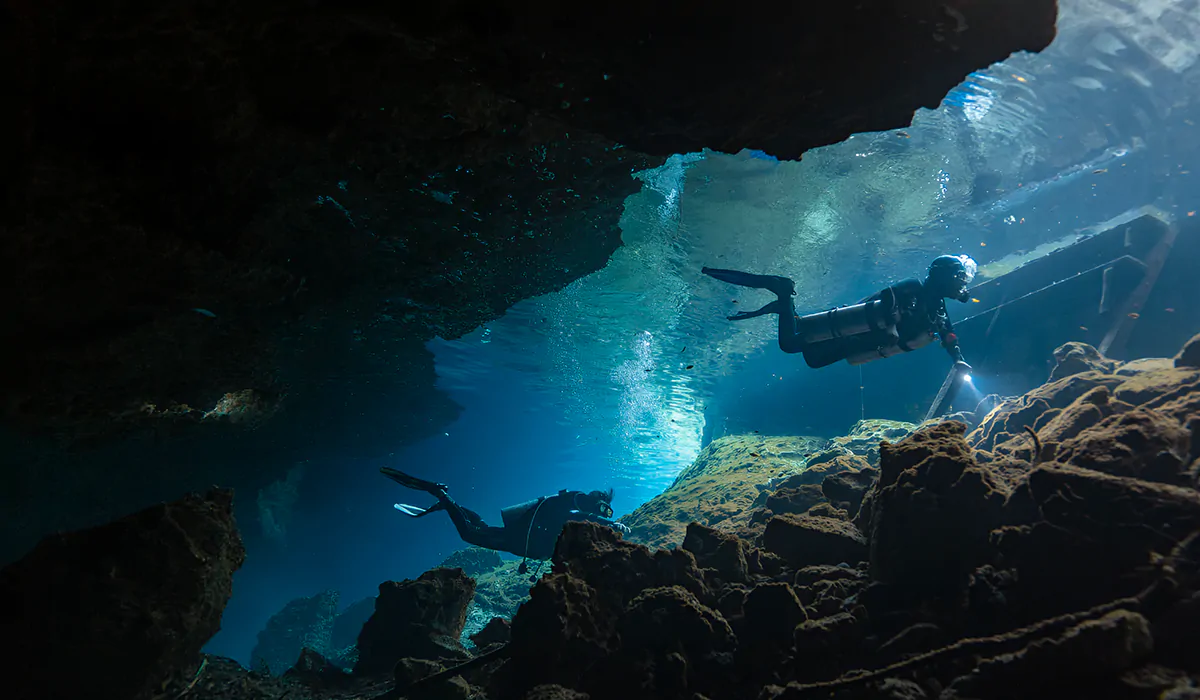
- A stable underground world: once inside the flooded caverns, the water is protected from wind, waves, storms and the algae blooms caused by direct sunlight. This natural shield keeps the diving visibility, which can exceed 100 meters (over 300 feet), almost the same whether you come in January or August.
Rain on the surface, clarity underground
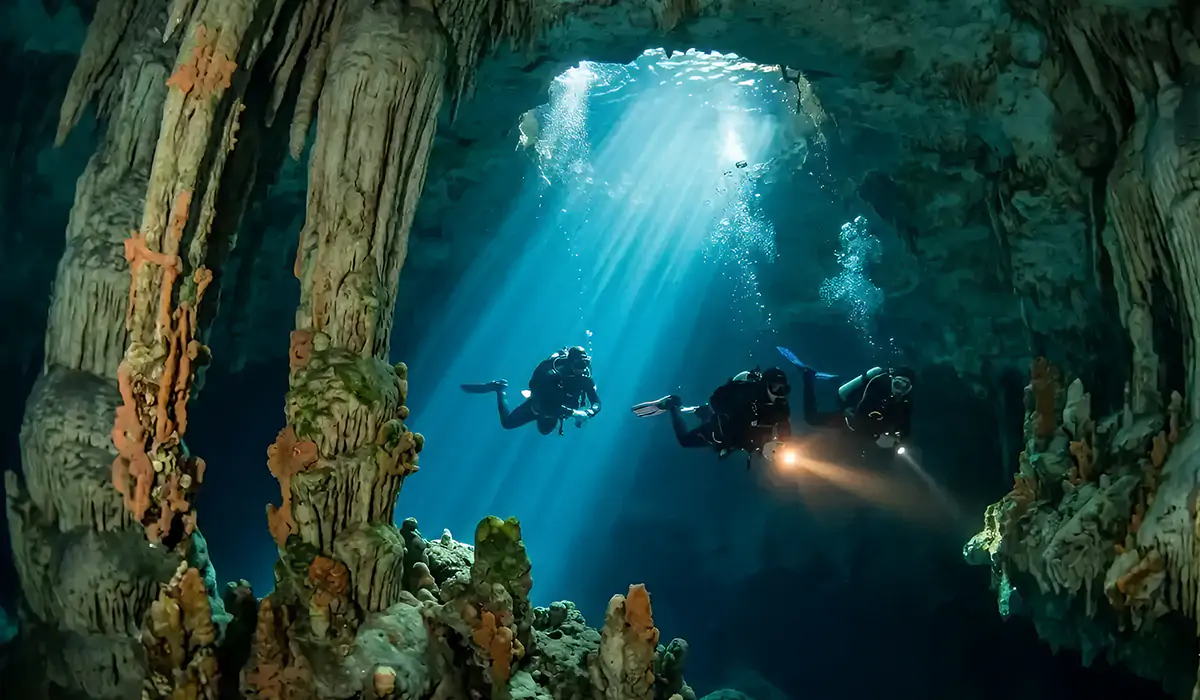
Many travelers planning a Caribbean holiday worry about the rainy season or tropical storms. Coastal dive sites and reefs can lose some clarity after heavy storms or strong swells, but the underground caves keep their legendary diving visibility thanks to a clear separation from the surface.
- The sea and the caverns: on the coast, in places like Playa del Carmen or Cozumel, rough weather can stir up sand and organic matter and affect the ocean conditions for a while. A few kilometers inland, the cenotes stay sheltered inside the limestone.
- The exception, heavy rain and tannins: during intense tropical downpours in the rainy season, some open cenotes can receive surface runoff carrying tannins from the jungle, which tints the water a warm amber or tea color for a while. Even then, the diving visibility remains amazingly sharp compared with ocean diving almost anywhere else in the world.
The best cenotes for visibility all year round
Almost every cenote in the Riviera Maya offers breathtaking clarity, but some are famous around the world for visibility that’s hard to believe:
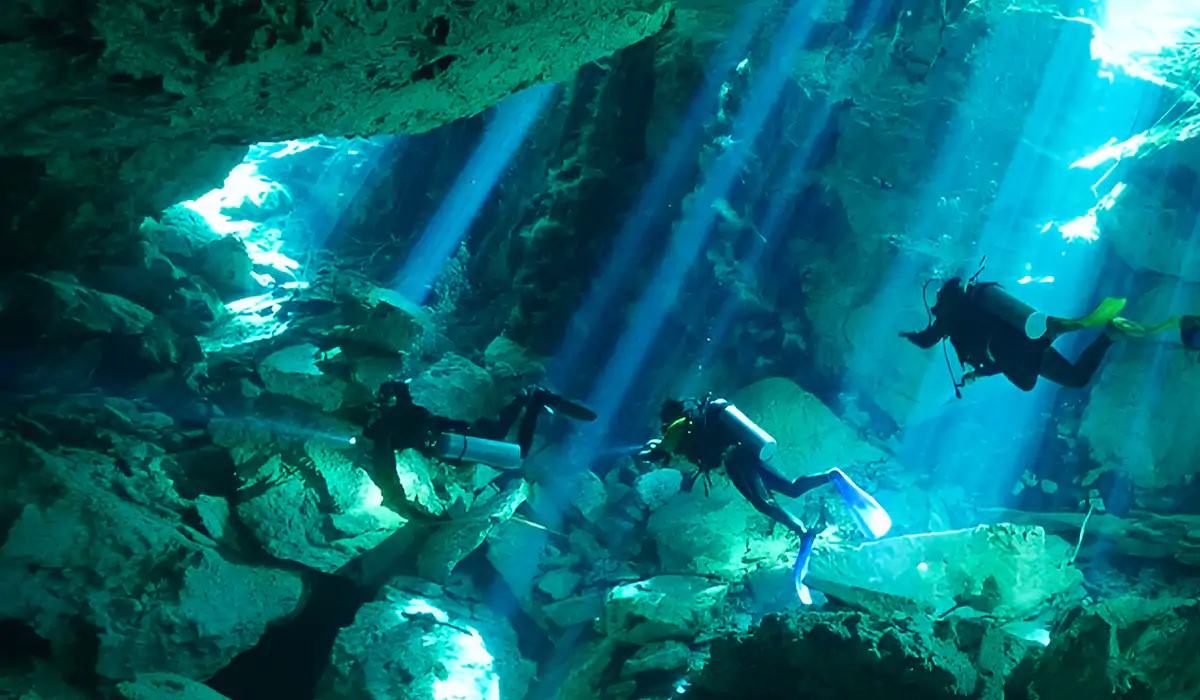
- El Pit: this huge sinkhole in the jungle has a vertical shaft where the sunlight reaches deep into the abyss. On bright days, the light beams go down past 30 meters (100 feet), creating a cathedral-like atmosphere where you can see other divers floating in mid-air, like astronauts in space.
- Dos Ojos: famous for its cavern circuits and its walls full of fossil shells, its shallow, sunlit water is so transparent that underwater photography becomes easy, for beginners and pros alike.
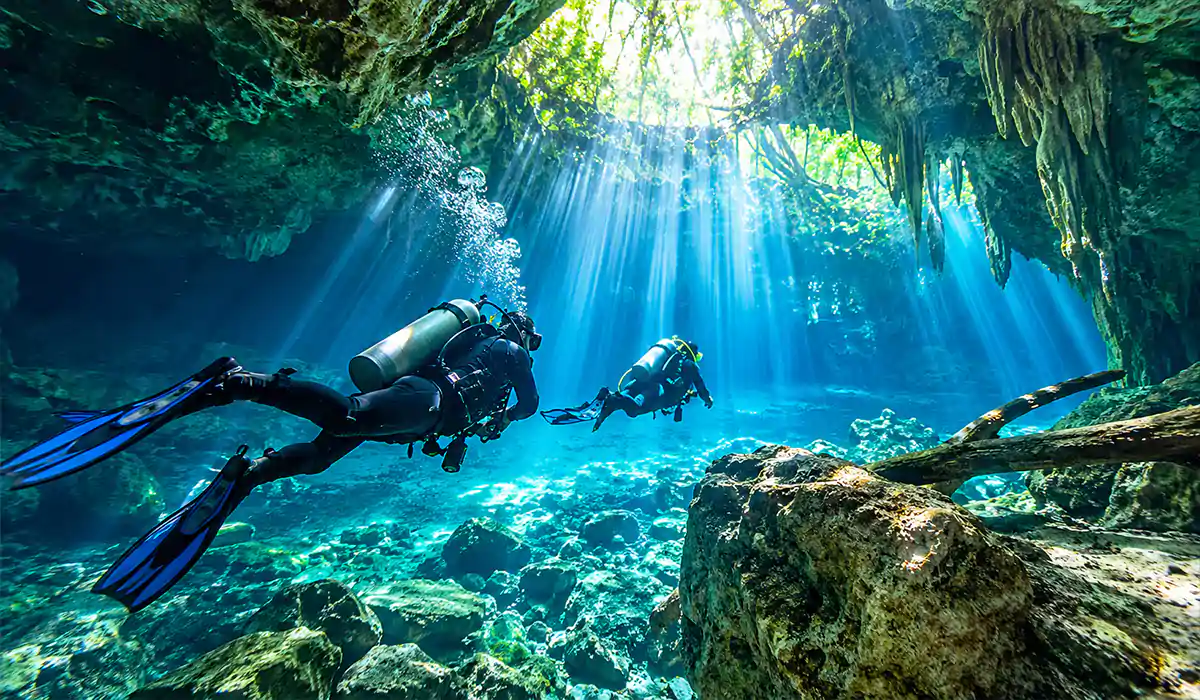
- Tajma Ha: known for its stunning light shows, where sunbeams come through the openings in the roof and cross the halocline, creating an unforgettable visual spectacle.
How to protect the visibility during your dives
Nature provides the crystal-clear water, but divers play a huge role in keeping it that way. Stirring up the fine silt on the floor of a cave or cavern can drop the diving visibility from 100 meters to zero in seconds. For a perfect dive for you and for the groups behind you, follow these golden rules:
- Perfect buoyancy: fresh and salt water meet in many cenotes, and the change in density can surprise careless divers. Precise buoyancy control stops you from kicking up the fragile sediment.
- Streamlined equipment: keep your hoses, gauges and accessories tucked in so nothing drags along the formations or stirs up particles.
- The right fin kicks: a regular flutter kick can push water down and lift the fine silt. Using the frog kick and careful turns keeps the visibility perfect for everyone in your group.
Planning your trip: when to come
Organizing a dream trip to Mexico means balancing flights, equipment and the choice of a local dive center.
- There’s no bad time to come: since the diving visibility in the cenotes is spectacular all year, you don’t have to limit your trip to the dry season. Summer brings warm weather and the best light in the cenotes, while winter brings exciting encounters with big animals in the ocean, like the bull sharks.
- Dive with certified guides: always dive with certified cavern or cave guides who know the layout of each site, the strict conservation rules and the light signals.
Dive into crystal-clear underground wonders
Understanding why the diving visibility in Mexico’s cenotes is so constant shows why the Yucatán Peninsula is one of the great diving destinations on Earth. Floating through ancient chambers full of light, where the water is so clear that walls and stalactites seem to hang in thin air, is an experience every diver remembers for a lifetime.
True wonder often lies just beneath the surface, waiting for those who approach nature with quiet respect, curiosity and the wish to explore responsibly.
If this guide has inspired you to plan your next diving trip, and you want to dive the cenotes with local professionals who put safety, small groups and unforgettable experiences first, discover our cenote dives, book your cenote divesbook your cenote dives or contact us with any question.