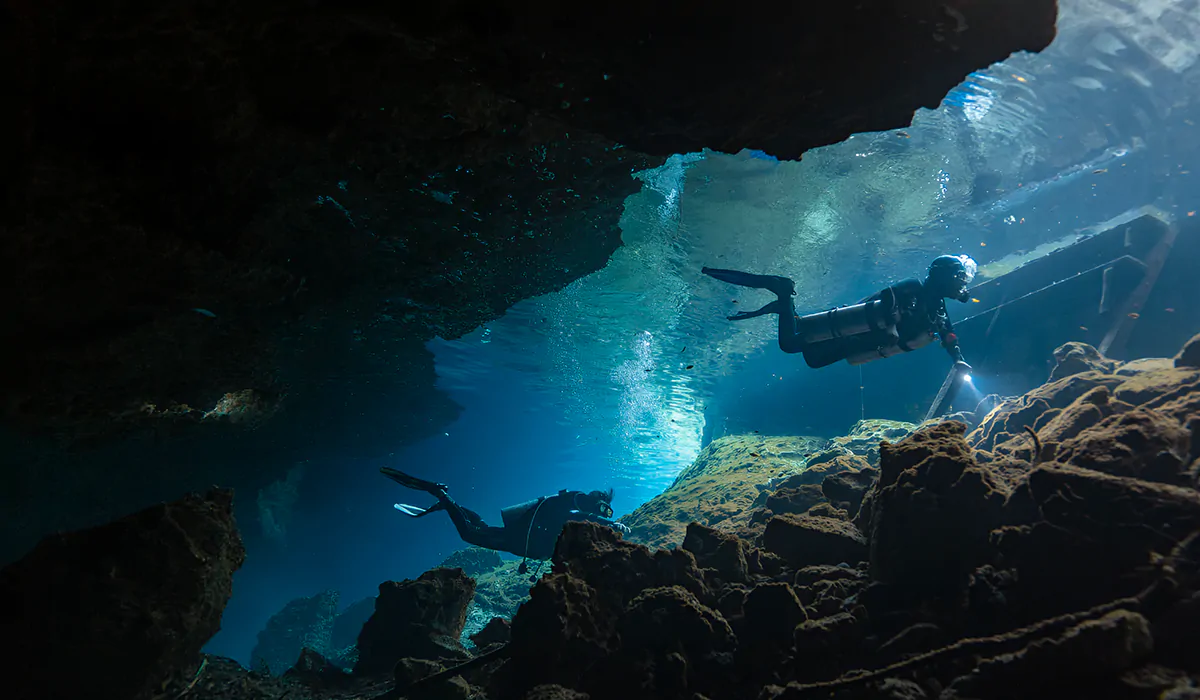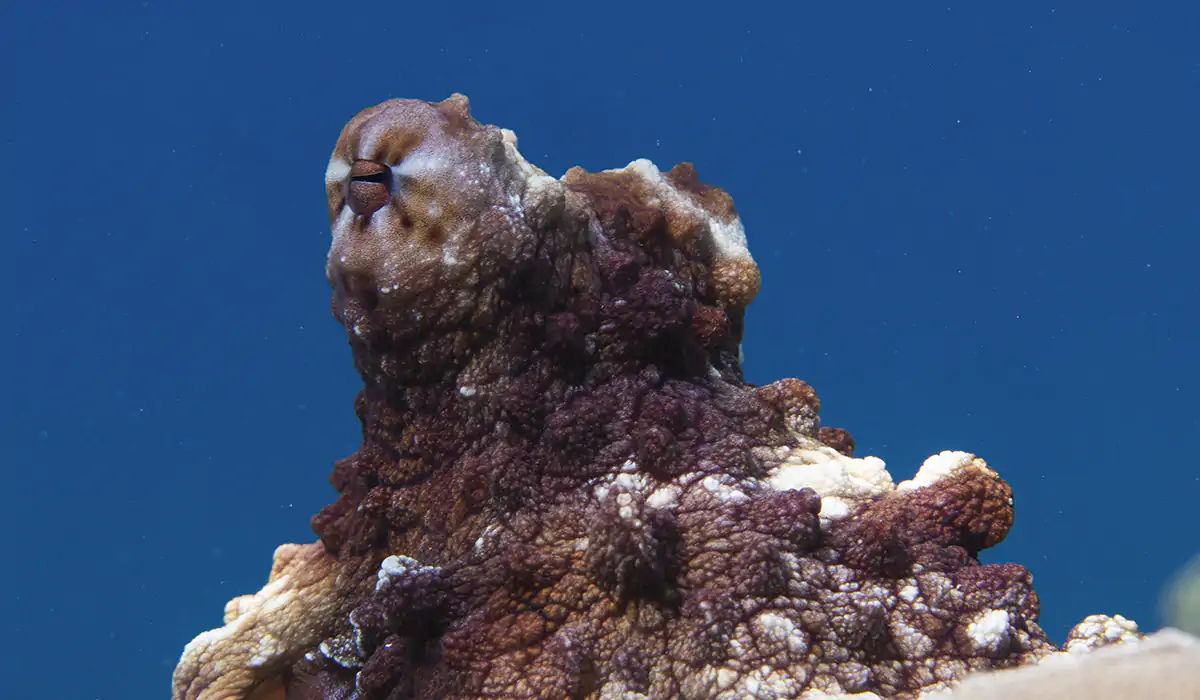
In Fish identification 2, we head to Cozumel, where clear water and easy drift dives make fish watching a pleasure. This time we meet the characters you are more likely to find hiding, resting or cruising past: feisty damselfish, masters of camouflage, a parrotfish that sleeps in a mucus bubble, and the moray eels and sea turtles that make a dive unforgettable. Learn who is who, and every reef starts to tell its own little stories. With our guides at Pasku Dive, you will also see that watching responsibly is the best way to enjoy the blue.
Why learning the locals makes every dive better
Most divers start by noticing the big, obvious animals. The real fun begins when you can name the small ones too: the damselfish guarding its patch of algae, the filefish that looks like a blade of seagrass, the parrotfish crunching on coral. Once you know who is who, a dive stops being a swim past colourful shapes and becomes a series of little encounters.
Cozumel and the rest of the Mexican Caribbean sit on the Mesoamerican Reef, the second-largest barrier reef system in the world, with warm, clear water most of the year. Recognising the marine life you will see on your dives also keeps you and the animals safe: some fish defend their territory, some have venomous spines, and all of them are best admired from a respectful distance. Look, don’t touch.
Home on the Reefs
Coral reefs are the favorite refuge for many species due to the abundance of hiding spots and food. This is where life explodes in every crack and crevice.
Royal Gramma
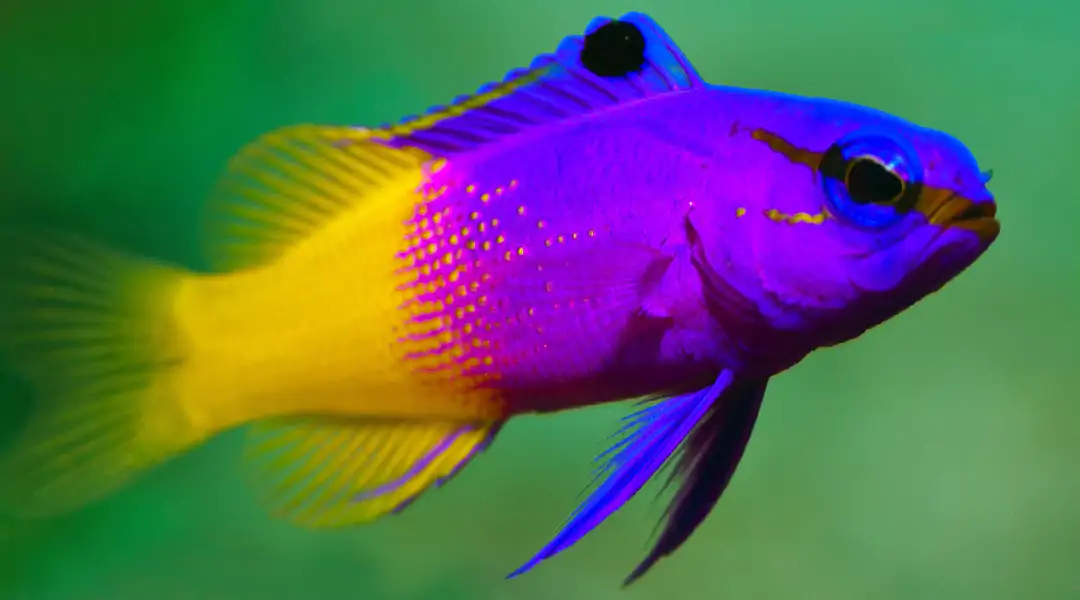
photo: Amaury Cruz
(Gramma loreto)
Also known as the “fairy basslet”, the royal gramma is a planktivore, eating mostly zooplankton and crustaceans. It is also a cleaner fish.
How to identify it: Can be a light purple to a deep violet starting at the head which fades mid-body to a golden yellow at the tail.
Behavior: They are generally peaceful fish, but are very protective of their territories and are known for chasing out other small fish.
Threespot Damselfish
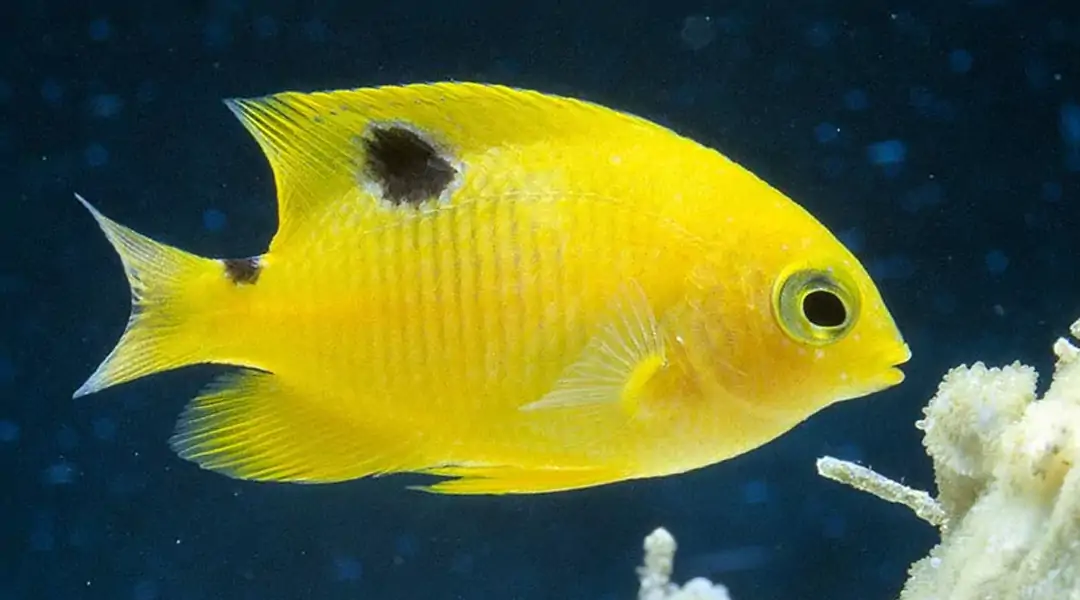
photo: Dr. Giuseppe Mazza
(Stegastes planifrons)
They look cute when they are young, but beware of the adults.
How to identify it: There is a major difference between the juvenile and the adult. The adult is brownish-grey, while juveniles are bright yellow with three distinctive black spots.
Safety Tip: Adults are highly aggressive and vigorously defend large territories against intruders, including divers and much larger fish. Be careful!
Slender Filefish
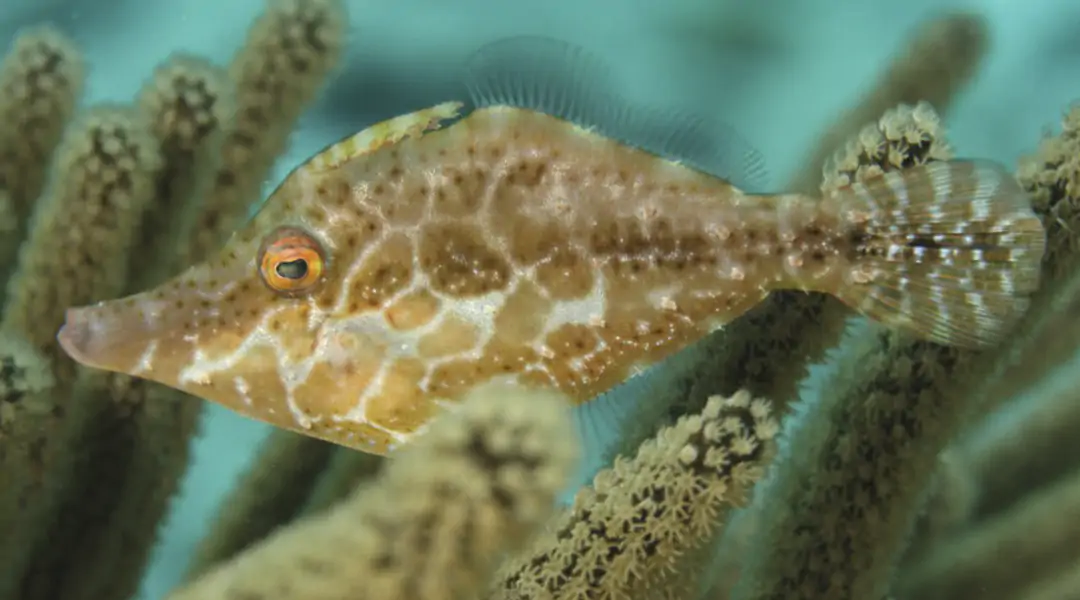
photo: Brian Lasenby
(Monacanthus tuckeri)
Very difficult to see as this exceptional fish blends with its environment. It has an erectile front dorsal spine and a flexible/retractable belly flap!
How to identify it: Slender, laterally compressed body with a long, concave snout and a small mouth. Shades of brown, red-brown, grey, or lime green, white lines, or a broad darker stripe behind the eye.
Camouflage: Possesses a remarkable ability to rapidly shift color and patterns to blend into gorgonians (sea plumes and sea rods), seagrass, and sponges.
Stoplight Parrotfish
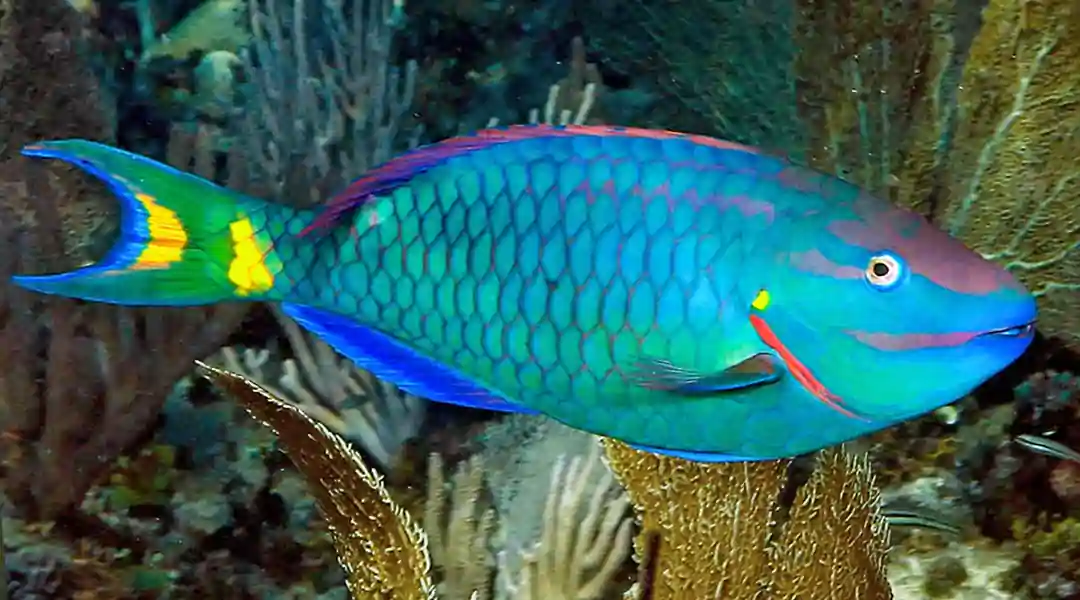
photo: Keoki Stender
(Sparisoma viride)
Parrotfishes grind up ingested coral and excrete it as fine white coral sand, contributing significantly to island and beach sand production!
How to identify it: Changes colors as it matures. Females & Young: reddish-brown or dark back with rows of white spots and a bright red or pinkish underside. Males: bright blue-green with pink or orange markings, blue stripes around the mouth/eyes, and a yellow or orange tail fin.
Night Routine: They are strictly diurnal and sleep on the seafloor wrapped in a protective, translucent mucus cocoon.
Hidden in the crevices: Moray Eels
Morays spend their days tucked into holes and cracks in the reef, with only their heads showing and their mouths slowly opening and closing. That is not aggression: they are simply pumping water over their gills to breathe. They are worth looking for under ledges and in coral crevices.
Green Moray
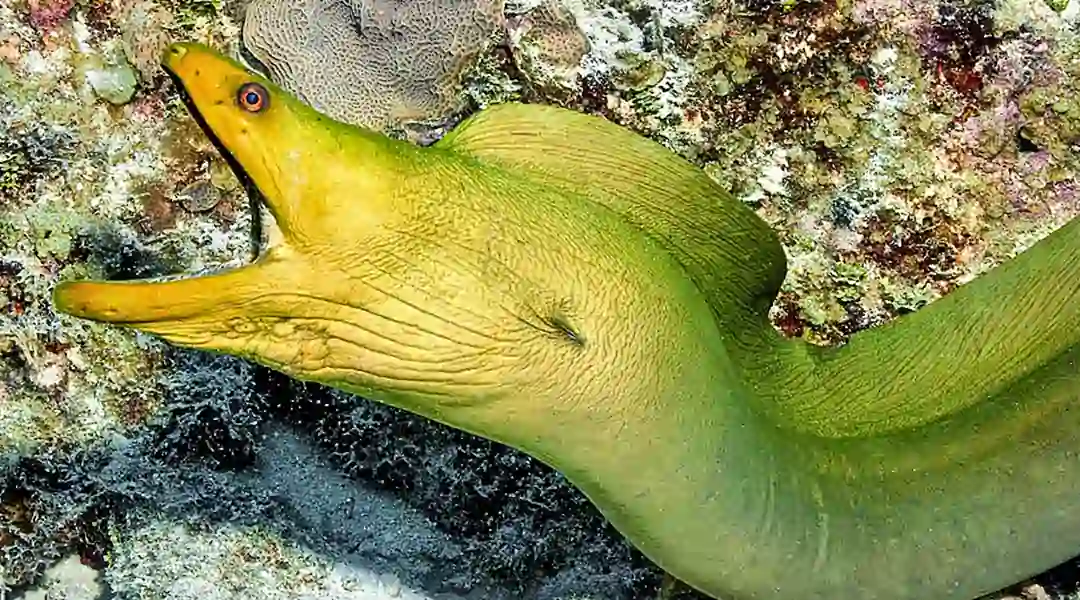
photo: Allison & Carlos Estape
(Gymnothorax funebris)
The largest moray of the Caribbean, and one of the most impressive animals to find in a crevice. It looks fierce, but it is shy and has no interest in divers.
How to identify it: A thick, powerful body that can pass 2 metres (6 ft) in length, with no pectoral fins. Its skin is actually brown; the green colour comes from a layer of yellow mucus on top.
Behavior: It rests in holes during the day and hunts fish, crustaceans and octopus at night. It will only bite if it feels cornered or if someone puts a hand in its hole, so never reach into crevices.
Goldentail Moray
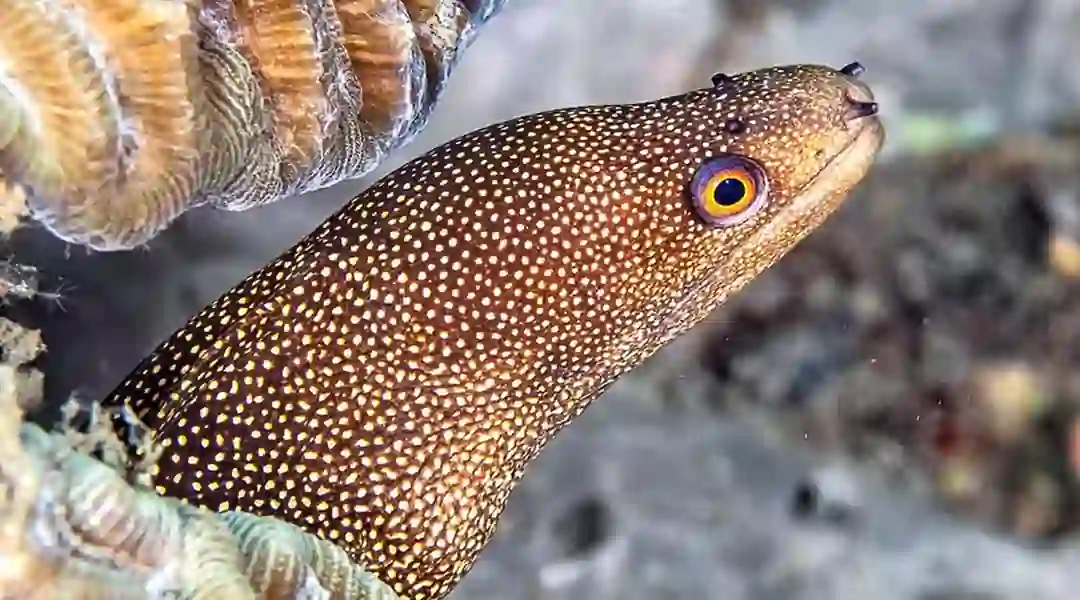
photo: Allison & Carlos Estape
(Gymnothorax miliaris)
A small, pretty moray that is easy to miss, as it often shows only its head from a crack in the shallow reef.
How to identify it: A slim, dark brown to blackish body, about 60 cm (2 ft) long at most, covered in tiny golden-yellow speckles, with a yellowish tint toward the tail.
Fun fact: Like other morays it keeps its mouth opening and closing to breathe, not to threaten you. Look under ledges and inside small holes, and bring a torch to light up the colours.
Gentle visitors: sea turtles
Few moments in diving are as calm as a sea turtle gliding past, or resting on the reef, unbothered by your bubbles. The Mexican Caribbean is a feeding and nesting area for several species, and two of them are regularly seen on dives: the green turtle and the hawksbill. Keep your distance, never chase or touch them, and let them go up for air at their own pace.
Green Turtle
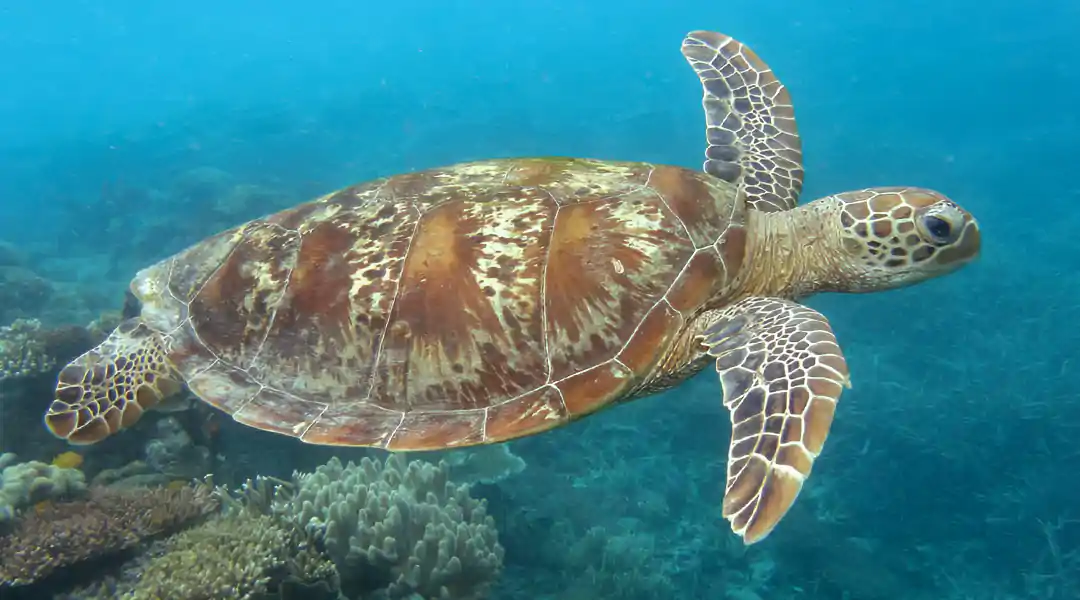
photo: Antonia Cooper
(Chelonia mydas)
A peaceful grazer that you will often find resting on the reef or feeding on the seagrass flats. Many divers tick this one off their list for life.
How to identify it: A smooth, oval shell in brown or olive, a small rounded head and a short, blunt beak. Adults commonly reach about 1 metre (3 ft) in shell length, and the oldest “elephant” turtles grow far bigger, which is why a large one is an unforgettable sight.
Behavior: Adults feed mostly on seagrass and algae, which helps keep the meadows healthy. A resting turtle can stay down for a long time, but it must still surface to breathe, so never block its way up.
Hawksbill Turtle
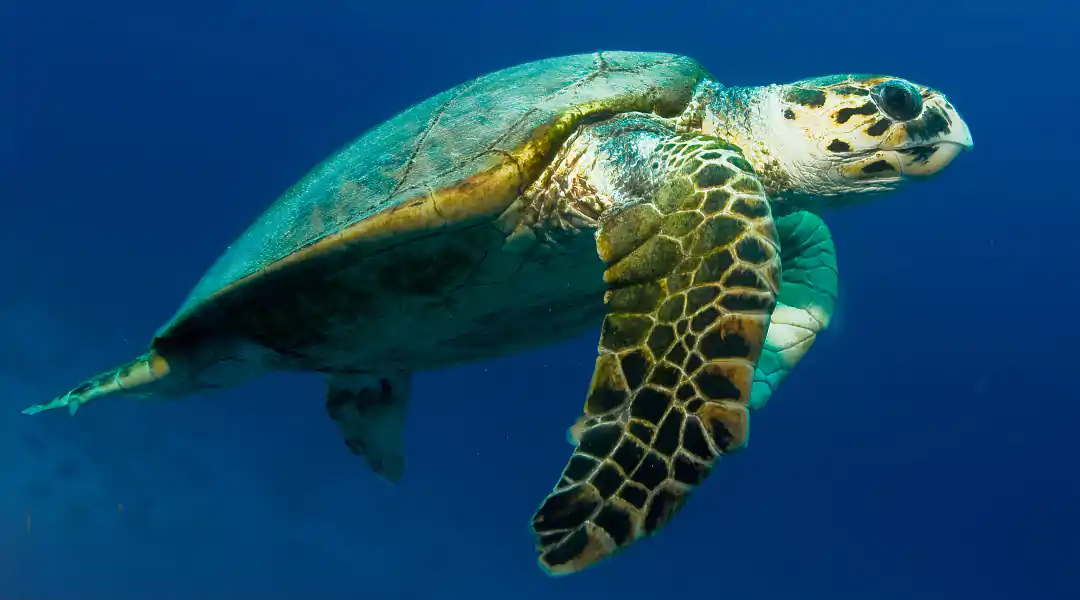
photo: unknown
(Eretmochelys imbricata)
The most elegant of the sea turtles, and a true reef resident. It slips into crevices to feed on the sponges that grow there.
How to identify it: A narrow, pointed head with a hawk-like beak, and a shell of overlapping plates in an amber, brown and gold pattern, with a saw-edged rear border.
Fun fact: A popular rumour says hawksbills get “high” from eating toxic sponges, an idea made famous by the laid-back turtle in Finding Nemo (although that character is a green turtle). Whatever the truth, they are critically endangered, so keep a calm distance and never touch.
Quick identification guide by color and shape
To help you on your next adventure, we have prepared this quick list to classify the fish you will see on your dives:
- Silvery with stripes or bars: Bluestriped grunts, yellowtail snappers and schoolmasters.
- Multicolored and slender: Bluehead wrasses, creole wrasses and queen parrotfish. They are very active, and you can sometimes hear parrotfish crunching on the reef.
- Reddish and hiding in crevices: Squirrelfish and soldierfish, which come out to feed at night.
- Large, dark, and solitary: Black groupers and nurse sharks resting under ledges.
- Snake-like: Trumpetfish, cornetfish and snake eels, often lying motionless or half-buried in the sand.
Tips to improve your marine life sightings
It’s not just about going down and looking; a good marine observer follows certain patterns:
- Control your breathing: Bubbles and noise scare fish. Calm, deep breathing makes you appear less threatening.
- Slow movements: Avoid waving your hands. Fish detect vibrations in the water through their lateral line. If you move like part of the current, they will accept you into their environment.
- Use a torch: Even during the day, a small dive light helps bring back the red colors in deep cracks, revealing hidden scorpionfish or shrimp.
- Consult guides after the dive: Always have a local fish ID guide handy. Writing down what you saw in your logbook is the best way to memorize the names.
Responsible diving: protecting what we love
The Mexican Caribbean is home to several Marine Protected Areas. These spaces are vital because they act as “nurseries” for life. Places like the Cozumel Reefs National Park or the Puerto Morelos Reef National Park are prime examples of how protection allows the most common fish you will see on your dives to reach spectacular sizes.
By choosing dive centers that respect regulations and promote environmental education, you are directly contributing to the health of our oceans. Training is key: a Fish Identification or Underwater Naturalist course will forever change how you view the ocean.
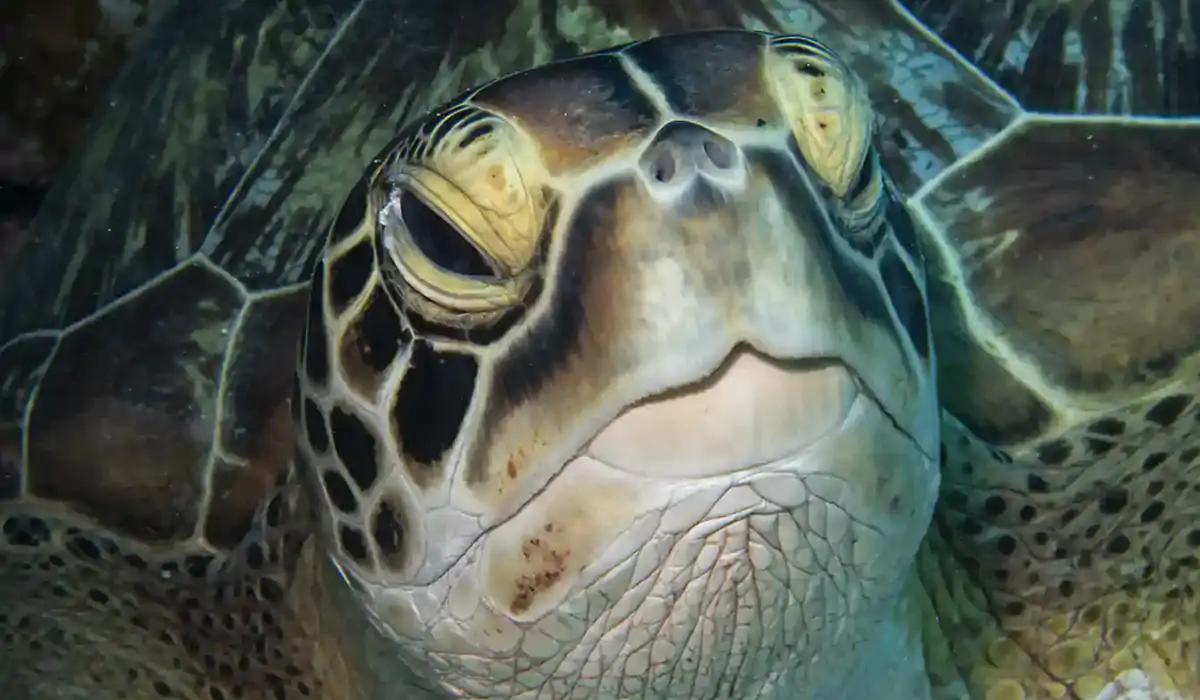
Your adventure begins underwater
Fish identification is a skill that is polished with time and curiosity. Every dive is a new opportunity to discover a behavior you haven’t seen before or a species that had previously eluded you. The most common fish you will see on your dives are the foundation of an ecosystem that grants us peace, beauty, and knowledge.
If you want to live this experience in a professional, fun, and safe way, join us at Pasku Dive. We don’t just take you to the best dive sites on our Playa del Carmen reef dives and in Cozumel; our guides will help you name all that life teeming beneath the surface, ensuring every outing is a live lesson in nature.
Are you ready to meet your underwater neighbors? Don’t wait any longer to explore the treasures hidden along our coast. Book your next diveBook your next dive and start ticking species off your list. The blue is waiting for you!