Pasku Dive – Playa del Carmen

Can I dive with contact lenses or ear problems?

Can I dive with contact lenses or ear problems?

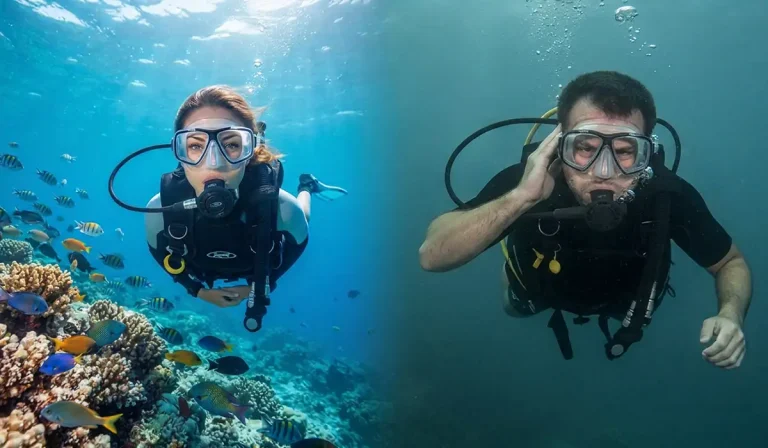
The excitement of diving into the ocean and discovering its marine life is an experience like no other. But for many people who love the sea, or who want to try scuba diving for the first time, some very specific questions come up before putting on a wetsuit. Two of the questions we hear most often are: Can I wear contact lenses underwater? and, above all, What happens if I have ear problems or struggle to equalize?

Read more »
Flying After Diving How Long to Wait

Flying after diving: How long to wait for safe travel

For divers coming to the end of an unforgettable holiday, whether in the cenotes of Mexico, on the reefs of the Caribbean or anywhere else in the world, boarding the flight home is always a bittersweet moment. But before you pack away your regulator, computer and fins, there is one essential safety rule to respect: decompression. If you’ve ever wondered about flying after diving, knowing exactly how long to wait is non-negotiable to prevent decompression sickness (DCS).

Read more »
Equalizing your ears when scuba diving - Effective techniques to prevent pain

Equalizing your ears when scuba diving: Effective techniques to prevent pain

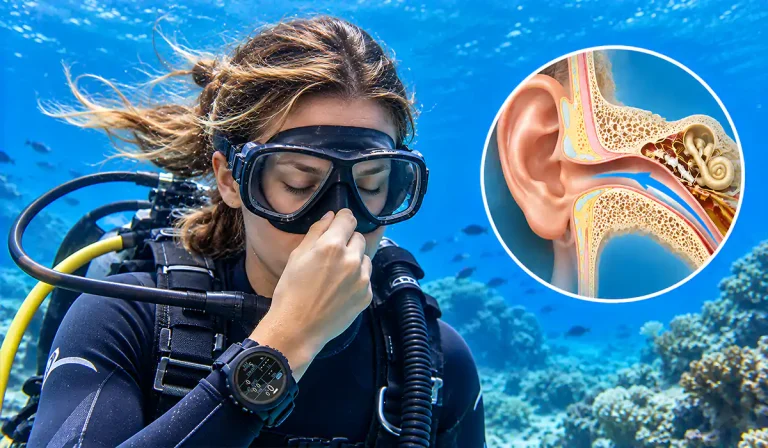
Picture the scene: you are on the dive boat, cruising toward a stunning marine reserve or gearing up to explore a historic shipwreck. Your wetsuit is perfectly fitted, your gear is fully checked, and you are bursting with excitement to explore the blue. You take that giant stride, begin your descent down the anchor line, and suddenly, you feel a sharp stab of pain in your head. If this has ever happened to you, then you already know the number one enemy of the novice diver (and even some veterans): ear pressure. Learning how to properly care for and release

Read more »
Fear of Diving - 5 psychological tips to stay calm underwater

Fear of Diving? 5 Psychological Tips to Stay Calm Underwater

The ocean has an undeniable magnetism. For many, the idea of exploring marine sanctuaries, discovering vibrant coral reefs, or gliding alongside schools of fish is the ultimate adventure. However, for a large number of people, the prospect of breathing underwater triggers a tight knot in the stomach. If you feel an irrational hesitation or a paralyzing anxiety at the thought of submerging, the first thing you should know is that you are not alone, and your reaction is completely human. A fear of diving is far more common than most people admit on the dive boat, and it can be

Read more »
Action cameras for diving - A guide to getting started in underwater photography

Action cameras for diving: a guide to getting started in underwater photography

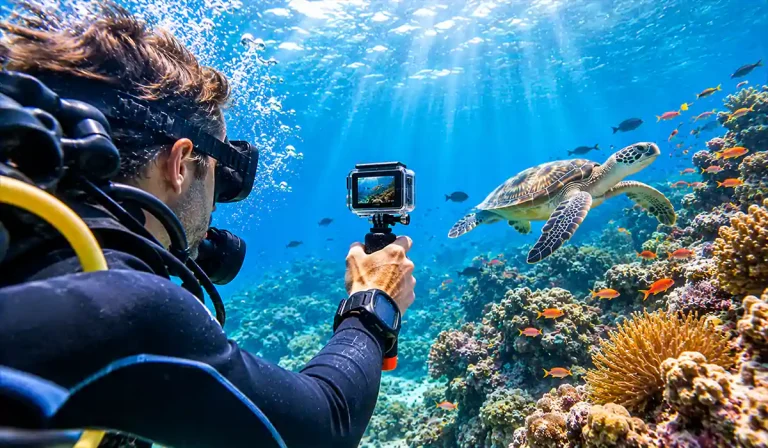
Submerging into the blue is an experience that often leaves you speechless, but we frequently find ourselves wanting to share that beauty with those back on land. This is where action cameras for diving come into play—the perfect gateway to the fascinating world of underwater photography, or UW photo. In the past, capturing images underwater was a privilege reserved for professionals with expensive and heavy equipment; today, thanks to modern technology, any diver can take home a crystal-clear memory of the most common fish you will see on your dives.

Read more »
Fish identification 1 - Common species you can see on your dives

Fish identification 1 – Common species you can see on your dives

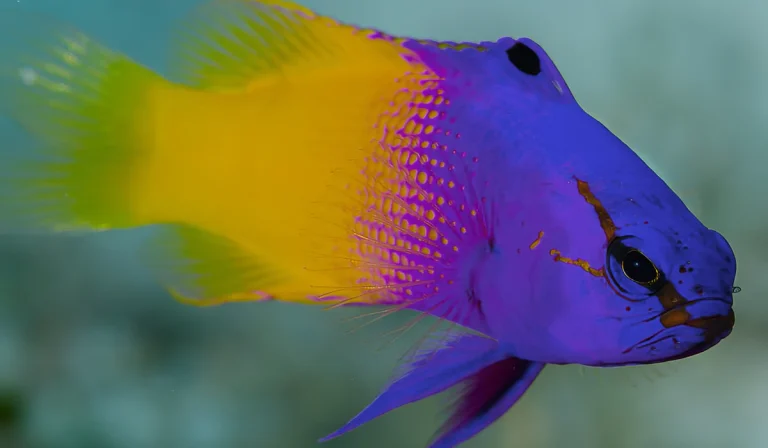
Plunging into the crystal-clear waters of the Mexican Caribbean is like opening a vibrant, living picture book. Whether you are gliding over the reefs of Playa del Carmen, exploring the walls of Cozumel, or marveling at the biodiversity of the Mesoamerican Reef, the question is always the same when you surface: “What fish was that?” Knowing the most common fish you will see on your dives not only enriches your experience as a diver but also helps you understand the delicate balance of the marine ecosystem.

Read more »
Hand signals in scuba diving - A universal underwater language

Hand signals in scuba diving: The universal underwater language

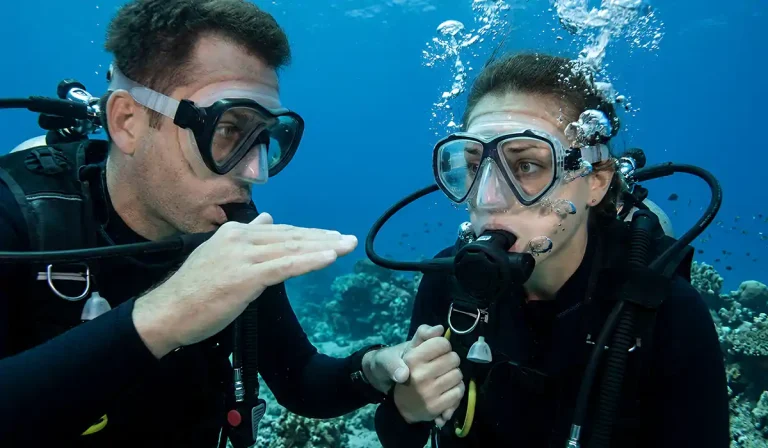
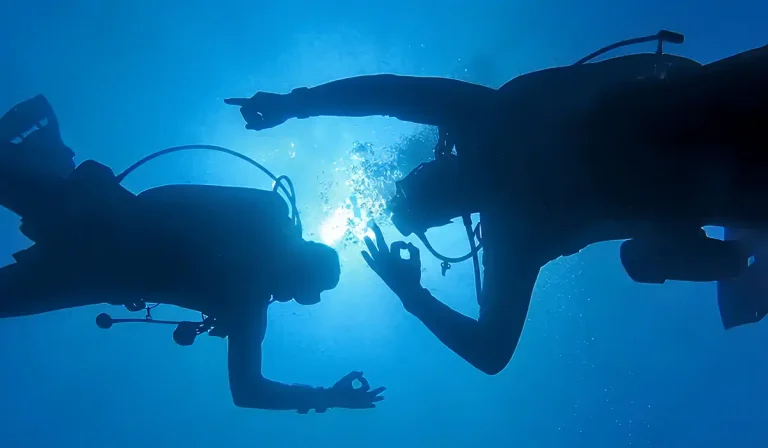
Submerging into the deep blue is, for many, the closest experience to visiting another planet. The moment the water covers your regulator and you descend those first few meters (about 10 feet), the outside world vanishes. However, one thing changes drastically: your ability to communicate verbally. Since we cannot speak underwater, the success of a dive and, most importantly, our safety, depends on a precise visual code shared by divers all over the world.

Read more »