Understanding why bull sharks choose this corner of the Riviera Maya every winter means looking at their biology, the ocean currents, their reproductive cycle and some fascinating ecological interactions. Whether you’re planning your next dive trip or you simply love marine biology, this article explains the scientific and environmental reasons behind this yearly meeting between the bull sharks and the warm Caribbean waters.
Why do bull sharks choose this coast in winter?
The arrival of bull sharks (Carcharhinus leucas) on the Caribbean coast isn’t random. It follows a biological cycle refined over thousands of years. When the water starts cooling further north, the coastal waters of Playa del Carmen keep the temperature and food conditions these sharks need, and they act like a magnet.
| Season | What the bull sharks do |
|---|---|
| Spring and summer | They move north and spend the season feeding |
| Autumn and winter | They arrive in the warm water off Playa del Carmen, most of them pregnant |
| Winter | They rest and carry their pups close to the coast |
| End of winter | They are believed to give birth in coastal lagoons and mangroves |
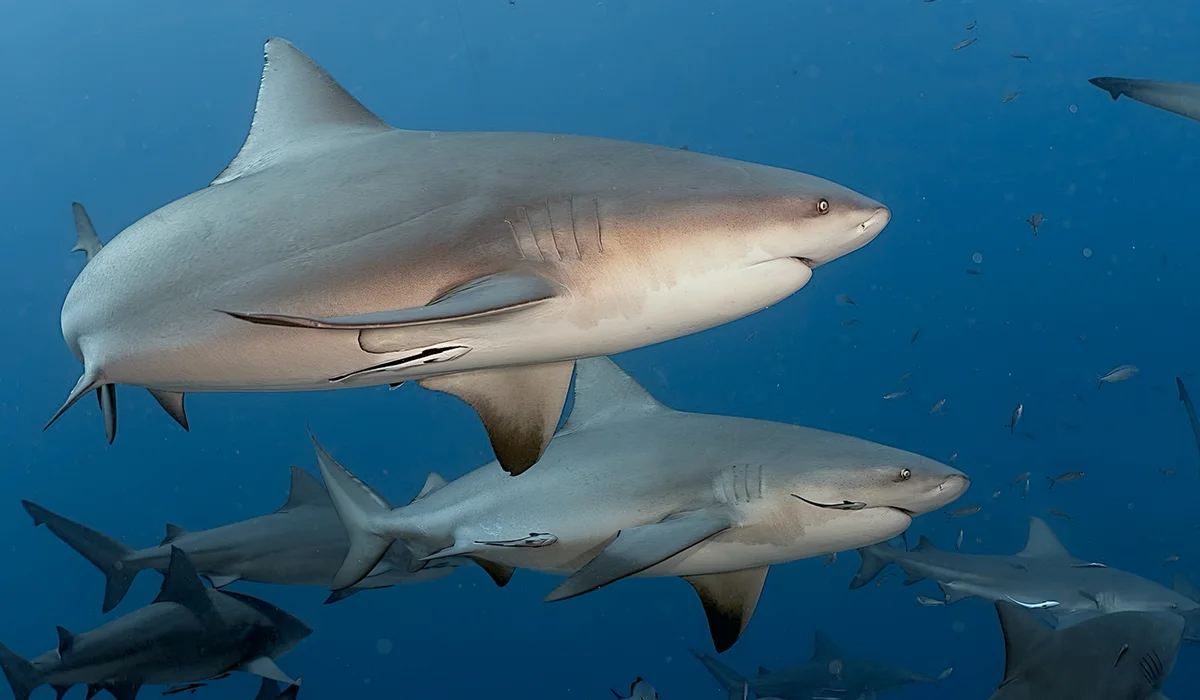
Unlike other famous shark destinations, such as the great white sharks of South Africa or the liveaboard trips of the Galápagos, the bull shark gathering in the Riviera Maya has one remarkable feature: the vast majority of the sharks that come close to shore in winter are pregnant females.
The biological and environmental reasons
To understand why bull sharks gather just a few hundred meters off the beaches of Playa del Carmen, we need to look at the factors that shape their presence.
1. Water temperature and comfort
In winter, cooler currents lower the water temperature further north, in the Gulf of Mexico. Bull sharks prefer warm water and look for areas where the temperature stays steady at around 24–26°C (75–79°F). The shallow shelf along the coast of Quintana Roo offers exactly that, which helps them save energy.
2. Pregnancy, rest and nurseries
Female bull sharks carry their pups for about 10 to 12 months. Being pregnant means saving energy and avoiding the rough water of the open ocean. The shallow sandy areas off Playa del Carmen give them a calm space, protected from strong currents and from large predators.
The Yucatán Peninsula is also rich in mangrove lagoons and estuaries, where fresh water from the underground rivers flows into the sea. Bull sharks have a rare ability to adapt their kidneys to tolerate fresh water (a process called osmoregulation). This lets them enter lagoons and estuaries, and scientists believe they give birth in these brackish, protected areas, where the young sharks find shelter and plenty of food, away from the adults.
3. Food and a healthy ecosystem
Although pregnant females eat less in the later stages of their pregnancy, the reefs of the area, part of the Mesoamerican Barrier Reef, the second-largest barrier reef in the world, offer a rich and varied food supply. Reef fish, rays, crustaceans and passing schools of open-water fish keep both mother and pups healthy.
Myths and facts: are bull sharks dangerous in winter?
One of the biggest fears among people who have never dived with sharks is this species’ reputation. But dive professionals and marine biologists agree: the biology is very different from the movie version.
| Common myth | Biological reality |
|---|---|
| They attack any diver nearby | During the dive, they are calm and curious |
| They hunt humans | Humans are not part of their diet or their habits |
| Diving with them is out of control | The dives follow strict, guided safety protocols |
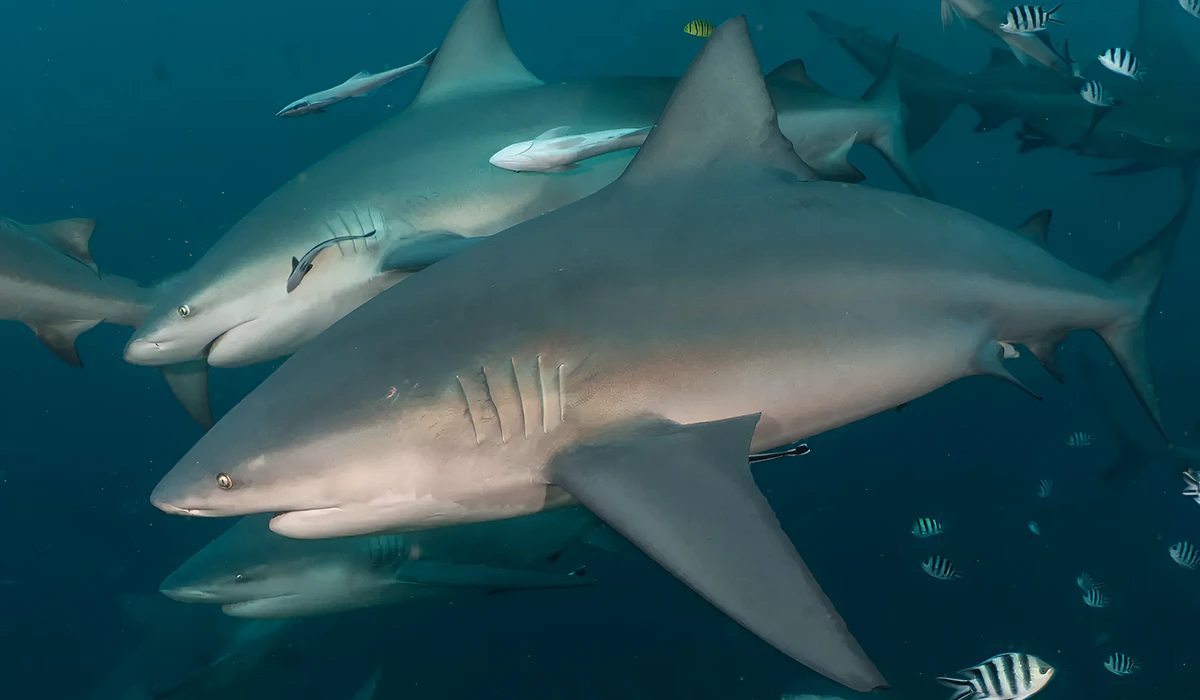
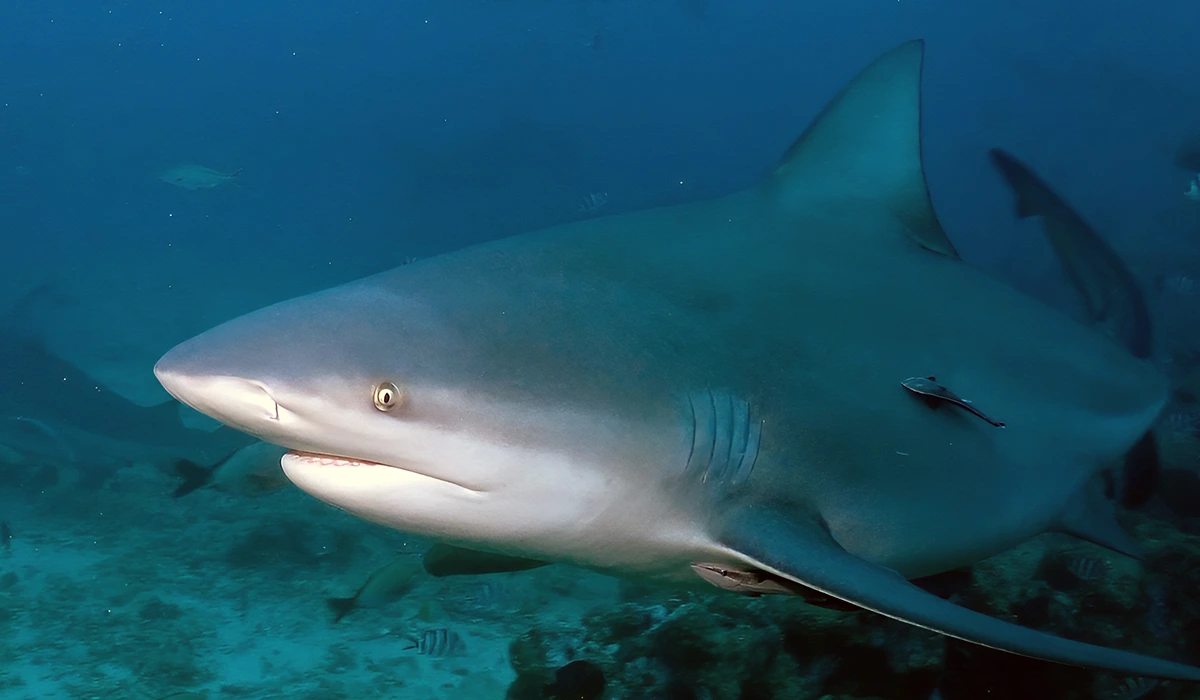
During the winter months in Playa del Carmen, the female bull sharks are remarkably calm, slow and majestic swimmers. Focused on their pregnancy rather than on hunting, they cruise slowly a few meters above the sandy bottom.
To keep the dives safe and respectful, specialized dive centers follow strict rules:
- Dark, full wetsuits: long, dark wetsuits avoid contrasts and shiny metal that could draw the animal’s attention.
- Staying still on the bottom: divers kneel on the sand, keep their arms close to their body and avoid sudden movements.
- Respecting the distance: never chase, touch or corner a shark, under any circumstances.
Bull shark conservation and the role of responsible tourism
Bull shark watching in Quintana Roo has completely changed the local view of this species. Once threatened by unregulated fishing and by the value of their fins in international markets, the sharks are now a living resource of huge economic and ecological value for the local community.
The work of marine conservation groups
In Mexico, organizations such as Saving Our Sharks work on photo-identification, acoustic tagging and satellite tracking of the sharks that arrive on the Caribbean coast every winter. Thanks to the joint work of scientists, former fishermen and dive centers, important progress has been made:
- Monitoring individual sharks: many females have been named and identified by their scars or body markings, showing that they come back to exactly the same spots year after year.
- Protected areas: support for local rules that ban shark fishing in breeding areas and along the coastal migration routes.
- Environmental education: talks for local residents and visiting divers, to change how people see the species and encourage its protection.
For divers who care about ocean conservation, taking part in ethically run bull shark dives is a direct way to help fund scientific and environmental projects.
Practical guide to diving with bull sharks
If you’re thinking of experiencing this world-class encounter for yourself, plan ahead to make the most of the season.
When is the best time?
The first sharks are usually seen at the end of October or early November, but the peak months are December, January and February. Toward the end of March or early April, as the water warms up again and the pregnancies come to an end, the females leave for the lagoons to give birth and then head north. For a month-by-month view, read our article The Best Month to See Bull Sharks in Playa del Carmen.
Recommended experience
These dives take place over open sandy bottoms at 20 to 25 meters (65 to 80 feet), often with moderate currents, so the right preparation matters:
- Minimum certification: an Advanced Diver certification (PADI, SSI, SDI/TDI or other recognized agencies).
- Experience in the ocean: good control of your neutral buoyancy, and being comfortable with a quick descent along the line so the current doesn’t carry you away.
- Air management: good air management to enjoy long bottom times within the no-decompression limits.
Checklist before your trip
- An Advanced Diver certification card and an up-to-date logbook.
- Valid international dive insurance (DAN, Divers Alert Network, or another dive insurer).
- A dark 3 mm or 5 mm wetsuit, as the water is around 25°C (77°F) in winter.
- A low-volume mask and well-fitting fins with booties.
- The diver medical questionnaire, and a doctor’s certificate if you answer “yes” to any question.
An unforgettable experience, with the right guides
Watching the powerful silhouette of a female bull shark glide past a few meters away, and feeling the strength and calm of an animal whose ancestors roamed the oceans before the dinosaurs, is an experience that changes any diver. It isn’t only about the adrenaline. It’s about understanding the irreplaceable role that large predators play in keeping the ocean balanced and healthy.
To make sure your bull shark dives are safe, ethical and personal, diving with highly qualified professionals makes all the difference.
At Pasku Dive, we love sharing the beauty of the underwater world, in small groups, with complete safety and deep respect for marine ecosystems. Discover our bull shark dives, book your bull shark divebook your bull shark dive or contact us to plan your next unforgettable dive.