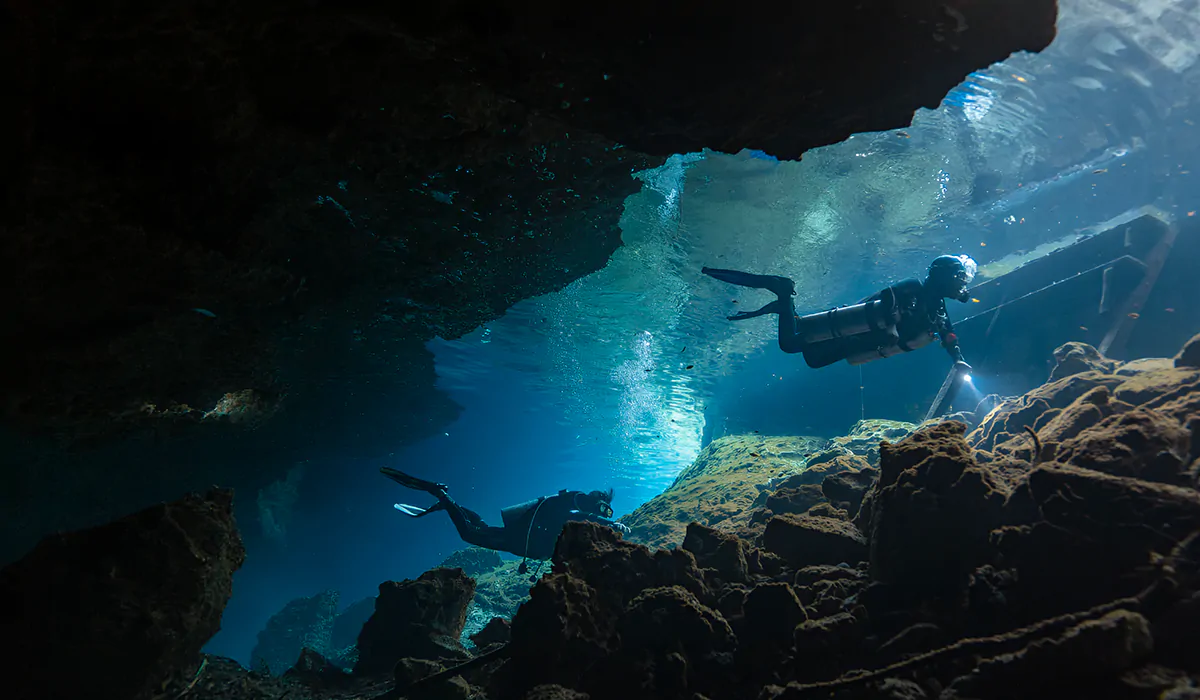
For divers and archaeology lovers alike, exploring these flooded caverns is a rare window into the Earth’s distant past. But what can you actually see while diving in the cenotes? How did extinct giant animals and ancient human remains end up deep inside underwater caves? In this article, we look at the incredible paleontological and archaeological wealth hidden in the cenotes, the science behind their exceptional preservation, and how to experience these underwater time capsules safely and responsibly.
How the fossils and bones ended up in the cenotes
To understand why these flooded caves hold fossils and ancient skeletons, we need to go back to the last ice age, more than 10,000 to 12,000 years ago.
At that time, sea levels were about 100 meters (330 feet) lower than today. The huge cave systems of the Yucatán Peninsula were completely dry. The animals of the prehistoric forest, and the first humans, entered these caves looking for fresh water or shelter, while others fell by accident through the openings in the ground (the cenotes) and were trapped in the dark pits below.
When the ice age ended, the glaciers melted, the oceans rose and the whole cave system flooded. This created a unique, oxygen-poor (anaerobic) environment that protected the remains from decay, scavengers and erosion, and kept them intact until cave explorers found them thousands of years later.
What can you see while diving?
Diving in the cenotes can show you two kinds of underwater history: paleontological remains (the extinct animals of the ice age) and archaeological remains (the first Americans and the Maya civilization).
| Paleontological finds | Archaeological finds |
|---|---|
| Giant ground sloths (Xibalbaonyx) | Skeletons of the first Americans, like Naia |
| Saber-toothed cats and prehistoric bears | Maya ceremonial offerings and pottery |
| Gomphotheres, ancient relatives of the elephant | Ancient hearths and charcoal |
| Marine fossils in the rock: corals and shells | Ritual objects |
Something important to know before you go: most of the bones and skeletons lie deep in the cave zone, far from daylight, where only trained cave divers can go. On a cavern dive, what you’ll see with your own eyes are the marine fossils in the walls, the formations and sometimes a few objects near the light. The rest of this story is what makes every cenote dive so special.
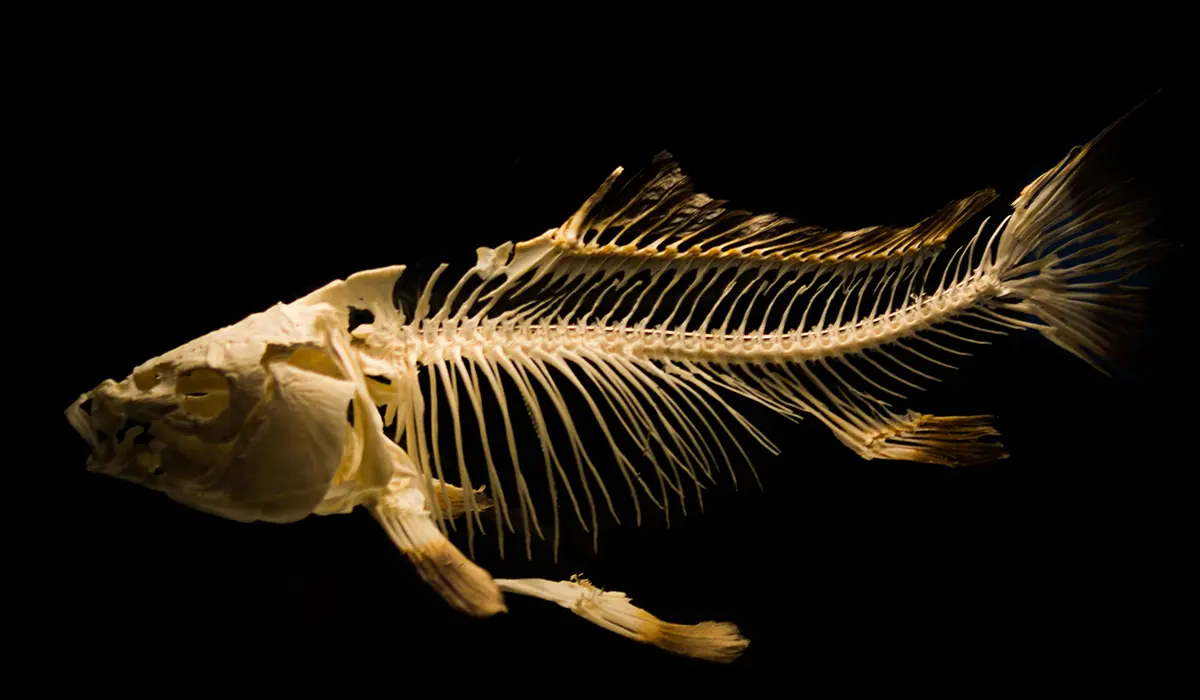
1. Ice age animals
The underground chambers hold the skeletons of legendary creatures that lived in the Americas during the Pleistocene:
- Giant ground sloths (Xibalbaonyx oviceps): large plant eaters, much bigger than today’s sloths, that fell into the sinkholes thousands of years ago.
- Saber-toothed cats and prehistoric bears: predators that entered the caves hunting or looking for water and could never climb back out.
- Gomphotheres: extinct relatives of the elephant, whose bones were found in famous sites like Hoyo Negro.
- Prehistoric horses: bones showing that horses lived in the region before disappearing at the end of the Pleistocene.
2. Ancient marine fossils in the cave walls
Long before the ice age, millions of years ago, the Yucatán Peninsula lay under the sea. That’s why, when you shine your light on the limestone walls and ceilings of a cenote, you can spot:
- Fossil corals: brain coral and other coral shapes preserved directly in the rock.
- Prehistoric shells: fossil clams and sea snails embedded all along the cavern passages.
- Other sea creatures: sea urchins and other fossils from that ancient ocean, millions of years old.
3. The first Americans and sacred Maya objects
Cenotes were not only traps for animals. They had deep spiritual meaning for the first people of the region, and later for the Maya civilization:
- The first Americans: discoveries like Naia, a nearly complete human skeleton about 13,000 years old found in Hoyo Negro, gave scientists key genetic information about the first people of the Americas.
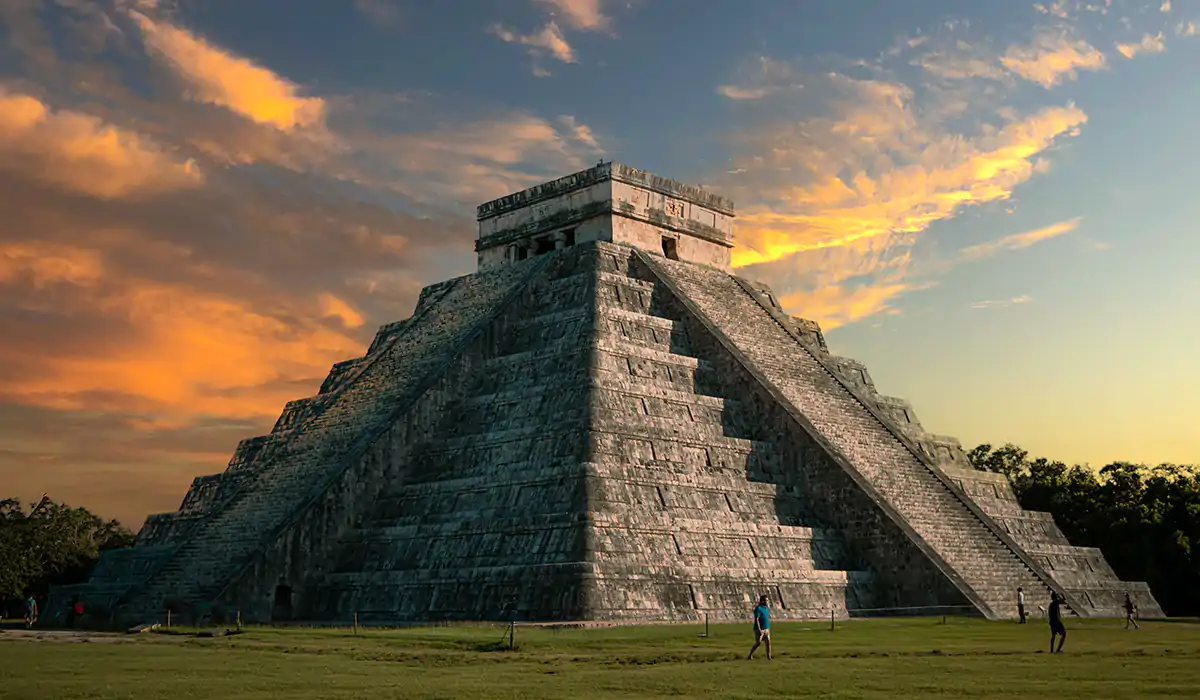
- Maya offerings: for the Maya, cenotes were gateways to Xibalba, the underworld. Priests placed ceramics, jade beads, wooden tools and other offerings in these sacred waters, where many still rest on the bottom today.
Why are the remains so well preserved?
The amazing preservation of bones, wood and organic material in the cenotes comes from three main factors:
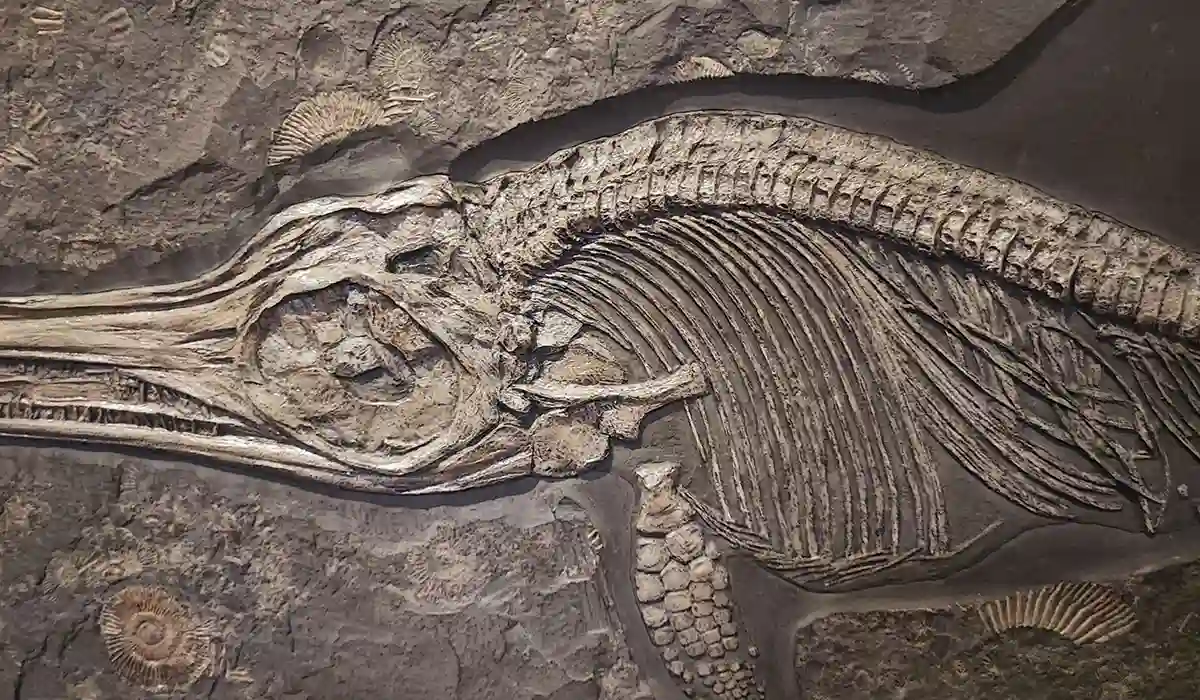
- Water without oxygen: below the halocline, where fresh water meets salt water, the oxygen almost disappears. Without oxygen, the bacteria that cause decay can’t survive, so decomposition practically stops.
- A mineral coating: while the caves were still dry, the water dripping from the limestone ceilings covered some bones with thin layers of calcite, a natural stone shell that protects them.
- No light and no waves: deep in the caverns and caves, there is no sunlight for algae to grow and the water is completely still, so even fragile bones aren’t worn away.
Responsible diving: how to protect the heritage of the cenotes
These treasures rest in extremely fragile environments, so diving near them means following strict conservation rules:
- Never touch: touching or moving an object destroys its scientific context, takes away vital information from researchers and can crumble fragile bones in an instant. Never pick up, move or touch any bone or artifact.
- Perfect buoyancy and trim: a single careless fin kick can stir up the fine sediment, bring the visibility down to zero and bury priceless fossils under a layer of silt. Keep a safe distance from the walls and the bottom.
- Gentle lights: don’t point powerful strobes or lights at fragile remains for long.
- Always follow a certified guide: a certified cavern or cave guide knows where the remains are and how to approach them without risk.
- Protected by law: in Mexico, all underwater cultural, historical and paleontological remains are protected by federal law and the National Institute of Anthropology and History (INAH). Taking or damaging anything is a serious crime.
Discover the cenotes with respect
Exploring the underwater history of the Riviera Maya and the Yucatán Peninsula is an unforgettable privilege. For your safety, and to protect these irreplaceable natural and historical monuments, always choose a dive center that works in small groups, knows the local sites well and follows strict environmental standards.
At Pasku Dive, we specialize in safe, personalized and environmentally responsible diving in the best cenotes and reefs of the region. Whether you want to admire ancient geological formations, learn about underground history or improve your buoyancy in the caverns, our guides make every dive unique and respectful of the underwater world. Discover our cenote dives, book your next cenote adventurebook your next cenote adventure or contact us with any question.