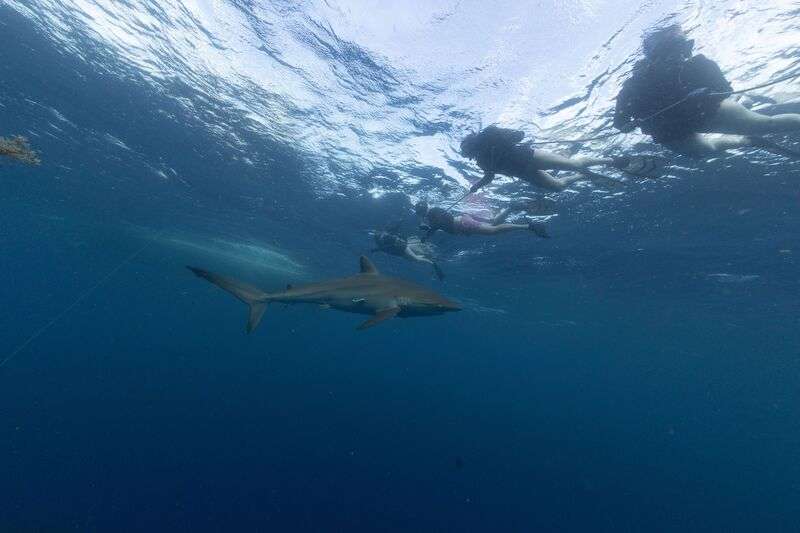
Menu
The Best Month to See Bull Sharks in Playa del Carmen
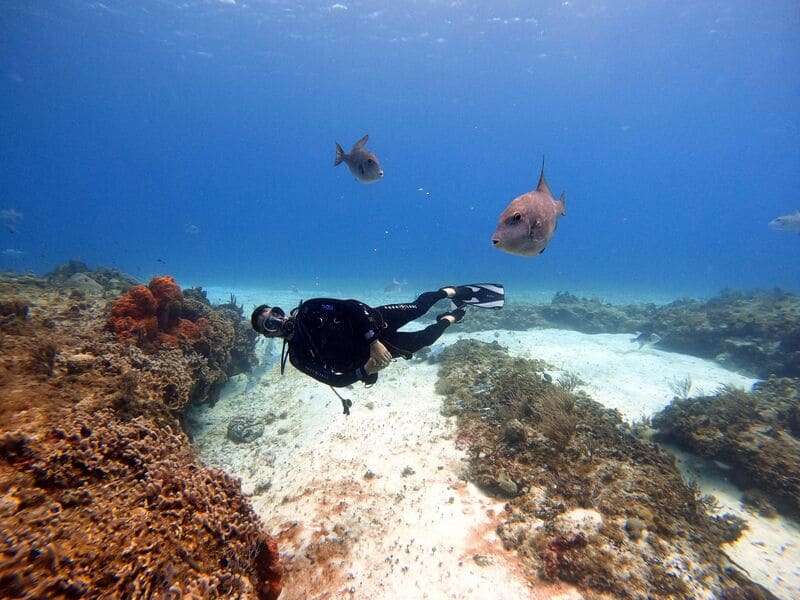
You are sitting at your desk, looking at flights, calendar apps, and dive gear websites. You’ve decided that this is the year you finally tick one of the most exhilarating underwater encounters off your bucket list: diving with wild bull sharks in Playa del Carmen, Mexico.
You can already picture it—dropping down onto the deep, white sandy floor of the Caribbean Sea, kneeling in perfect stillness, and watching massive, 3-meter pregnant female apex predators glide effortlessly through the crystal-clear water.
But then you look at your vacation calendar and hit a massive roadblock:
“When exactly should I book my flights? If I show up in October, will the sharks be there? What if I wait until April? I don’t want to spend thousands of dollars on a dive trip just to look at an empty patch of sand.”
Timing is everything. Because these magnificent animals do not live in Playa del Carmen year-round—they follow a strict, ancient migratory pattern dictated by nature, seasons, and water biology.
If you want to ensure a 100% success rate for your shark excursion, you need to understand the exact window of their arrival. Let’s look at the science, the temperatures, and the month-by-month breakdown so you can schedule your trip with absolute perfection.
The Golden Window: November to March
Let’s skip the fluff and look at the official calendar. The unconditional, non-negotiable bull shark season in Playa del Carmen runs from November through March.
During these five months, local dive operators run daily, highly regulated excursions to the shark site (located just a 5-minute boat ride from the main beach). Outside of this window, your chances of seeing them drop to nearly zero.
However, not all months within this window are created equal. To pick the perfect week for your specific travel style, you need to understand why they arrive: The Thermocline Effect.
The Secret Variable: Water Temperature
Bull sharks are highly sensitive to water temperatures, especially the large, mature females that make up 95% of the Playa del Carmen shark population. These females are heavily pregnant, and they migrate to the shallow coastal waters of the Riviera Maya to find the ideal thermal conditions to conserve energy before giving birth in the nearby freshwater mangroves.
Their Comfort Zone: Bull sharks actively seek out water that drops below 26°C (78°F).
The Departure Trigger: The moment the Caribbean current warms up and climbs past 27°C (81°F), their biological alarms sound, and they head back out into the deep, cooler trenches of the open ocean.
Because ocean temperatures fluctuate slightly every year based on global weather patterns, the exact start and end dates of the season can shift by a week or two. Here is what happens if you try to push the boundaries of the season.
What Happens If You Visit Shoulder Season?
Arriving Too Early (September to October)
The Caribbean summer is long and hot. Throughout September and October, the water in Playa del Carmen feels like a warm bath—frequently hovering around 29°C (84°F). If you book a dive package during these months, you will see stunning coral reefs, plenty of sea turtles, and beautiful tropical fish, but you will not see bull sharks. The water is simply too warm for them.
Arriving Too Late (April to May)
By late March and early April, the intense Mexican spring sun begins to rapidly heat the shallow coastal shelves. The sharks recognize that it is time to drop their pups in the safe mangrove ecosystems and move on. If you dive in mid-April, you might catch one or two lingering “straggler” sharks, but the reliable, massive aggregations will be gone until the following winter.
Month-by-Month Breakdown: Finding Your Perfect Date
To help you plan your itinerary based on your budget, crowd tolerance, and dive preferences, let’s break down the winter window month-by-month.
November: The Arrival (Exciting but Unpredictable)
Water Temperature: Around 26.5°C to 27°C (80°F)
The Vibe: This is the official kickoff of the season. The first cold fronts from the north start rolling in, dropping the sea temperature.
What to Expect: The sharks don’t all arrive on the same day. In early November, you might see 2 or 3 early arrivals. By late November, the numbers pick up significantly. It’s an exciting time to dive because the local diving community is buzzing with anticipation, but it holds a tiny bit of seasonal risk.
December & January: Peak Season (The Absolute Best Quality)
Water Temperature: 25°C to 26°C (77°F to 79°F)
The Vibe: This is the absolute sweet spot for shark numbers. The water is crisp, clear, and perfectly cooled.
What to Expect: Total reliability. You can expect to see anywhere from 5 to 15+ large, healthy female bull sharks circling the sandy plateau on a single dive. The encounters are long, dramatic, and breathtaking.
The Catch: Because this coincides with the Christmas, New Year, and winter holidays, Playa del Carmen is crowded, flights are more expensive, and dive boats book out weeks in advance. If you choose these months, you must book early.
February: The Photographer’s Paradise (Calmer Crowds)
Water Temperature: 24.5°C to 25°C (76°F)
The Vibe: The holiday crowds have gone home, the town steps down a gear, but the water remains at its absolute coldest.
What to Expect: Incredible shark activity. Because the sharks have been interacting with dive groups for a couple of months, they are completely relaxed, slow-moving, and highly accustomed to the stationary observation perimeters. The visibility is often spectacular, making it the favorite month for professional underwater photographers.
March: The Grand Finale (Great Values)
Water Temperature: Clambering back up to 26°C (79°F)
The Vibe: The final stretch of the winter migration.
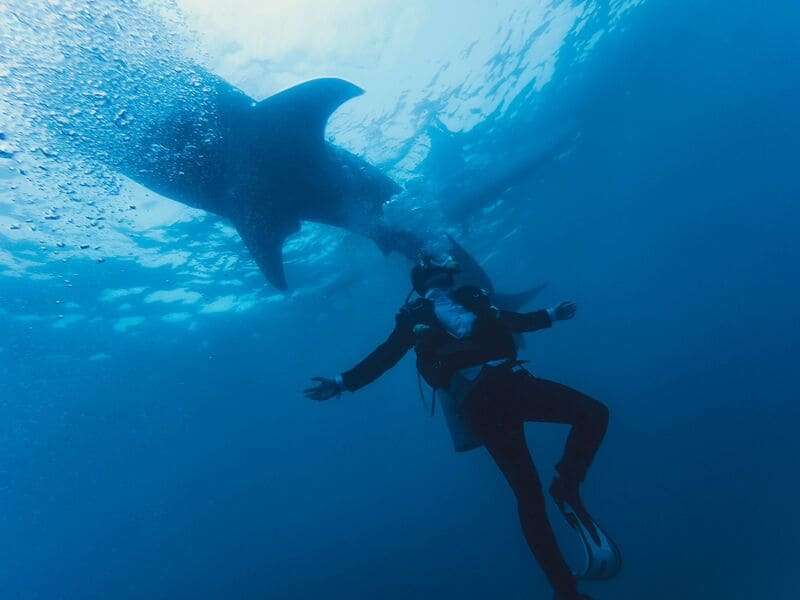
What to Expect: The sharks are still present in great numbers during the first half of the month. By the final week of March, you can feel the transition as temperatures rise. It’s an excellent month for budget-conscious travelers who want to snap up late-winter travel deals while still catching a world-class shark encounter.
Summary Table: Timing Your Trip At-A-Glance
| Month | Shark Numbers | Water Temp | Crowd Level | Booking Urgency |
| November | Moderate / Rising | 27°C (80°F) | Medium | Moderate |
| December | Maximum (Peak) | 25.5°C (78°F) | High | Very High |
| January | Maximum (Peak) | 25°C (77°F) | High | Very High |
| February | Maximum (Peak) | 25°C (77°F) | Medium | High |
| March | High / Tapering | 26°C (79°F) | Medium | Moderate |
Maximize Your Experience with Pasku Dive
Knowing when to come is only half the battle; knowing who to dive with changes everything. Because bull shark diving takes place at a depth of roughly 24 meters (80 feet) on a wide sandy bottom, it requires a calm mindset, strict group control, and impeccable safety standards.
If you sign up with a massive commercial dive agency, you risk being packed onto a boat with 15 or 20 divers of mixed experience levels, which can lead to shorter bottom times, chaotic lines, and frantic shark behavior.
At Pasku Dive, we do things differently:
We monitor the thermal conditions: We track local water temperature reports daily leading up to your trip, ensuring we take you out on the days with optimal visibility and maximum shark presence.
Exclusive, Small Groups: We limit our shark teams to small numbers, allowing for a quiet, respectful, and intensely personal encounter where you can focus entirely on the majesty of the sharks.
Flawless Safety Record: I walk you through an advanced, specialized briefing detailing shark psychology, body language, and exact group positioning so you can step into the deep blue with absolute peace of mind.
The sharks are preparing their winter migration—are you?
[Reach out to Pasku Dive via WhatsApp or email today to secure your dates for the upcoming season.] Tell us which month you are eyeing, and let’s construct a flawless, adrenaline-pumping dive itinerary that you will remember for the rest of your life!