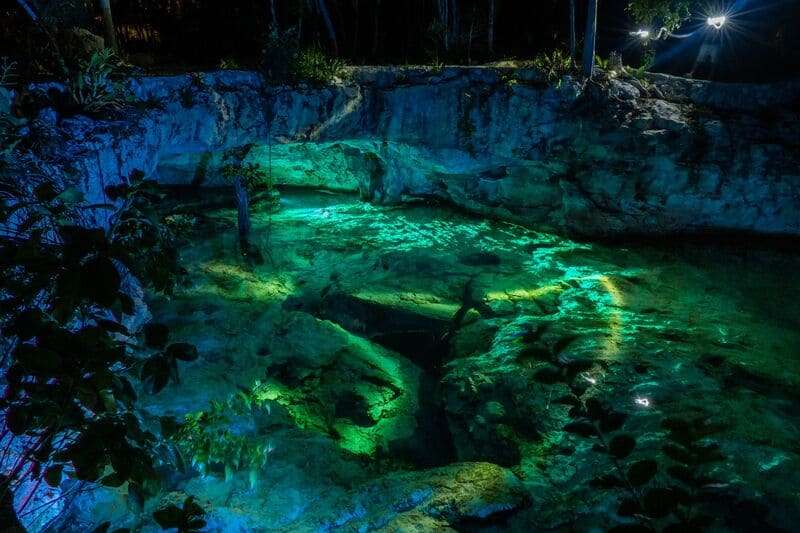

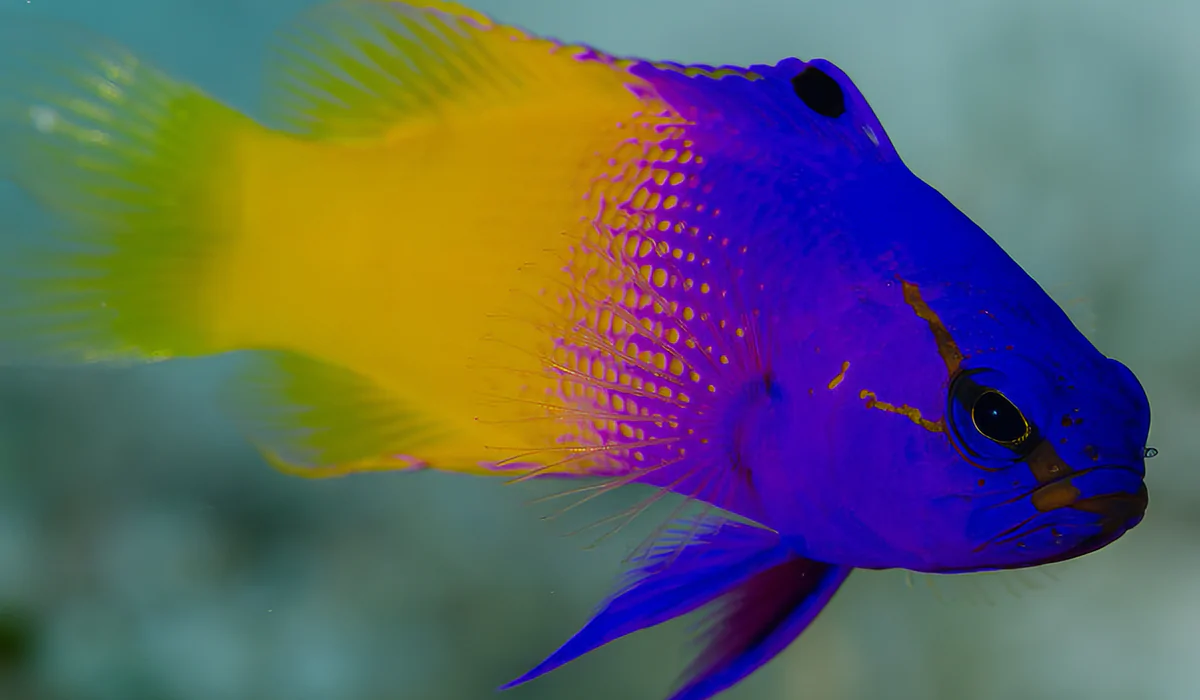
Plunging into the crystal-clear waters of the Mexican Caribbean is like opening a vibrant, living picture book. Whether you are gliding over the reefs of Playa del Carmen, exploring the walls of Cozumel, or marveling at the biodiversity of the Mesoamerican Reef, the question is always the same when you surface: “What fish was that?” Knowing the most common fish you will see on your dives not only enriches your experience as a diver but also helps you understand the delicate balance of the marine ecosystem.
In this article, we will journey through the underwater landscapes to help you identify the protagonists of our seas. From the cheeky sergeant majors to the majestic Nassau grouper, we’ll provide the keys to becoming a local biodiversity expert. Furthermore, with our guidance at Pasku Dive, you will discover that responsible observation is the absolute best way to enjoy the deep blue.
The importance of knowing local marine fauna
When we first start diving, everything looks like a blur of moving colors. However, as we gain experience and improve our buoyancy, we begin to notice the finer details. Identifying the common fish you will see on your dives allows you to spot fascinating behaviors, such as cleaning stations or intricate mating rituals.
The Mexican Caribbean sits on the Mesoamerican Reef, the second-largest barrier reef system in the world, with warm, clear water all year long. This creates a stunning variety of species. But before we dive into the list, remember the golden rule of scuba: look but don’t touch. Maintaining a respectful distance is essential to avoid stressing the animals and to preserve their natural habitat.
Home on the Reefs
Coral reefs are the favorite refuge for many species due to the abundance of hiding spots and food. This is where life explodes in every crack and crevice.
Sergeant Major
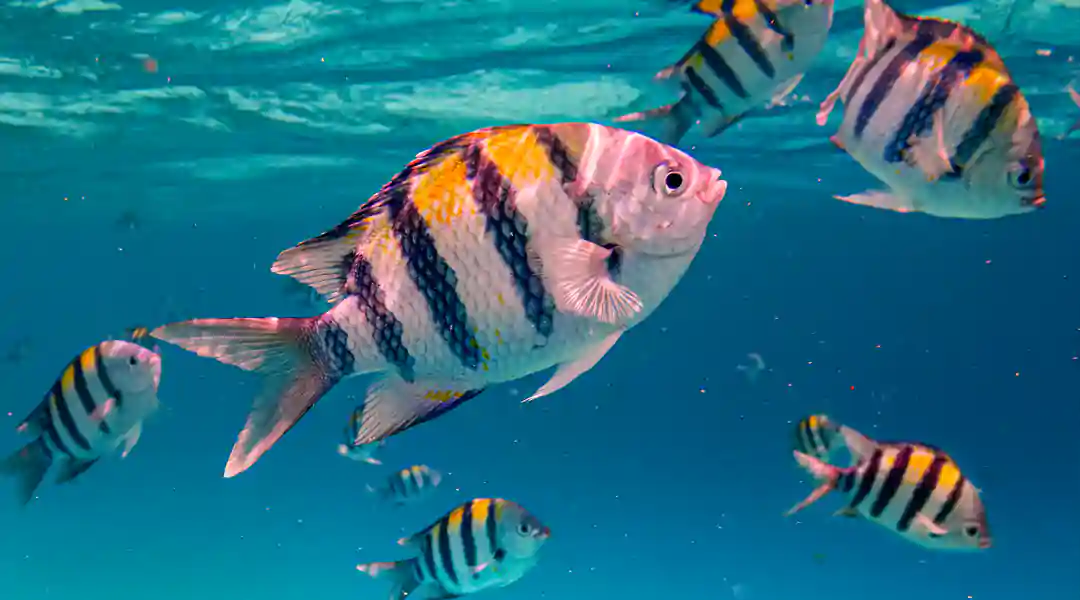
photo: Roland Bogush
(Abudefduf saxatilis)
Named for the black bars on its sides that look like a sergeant major’s stripes, this fearless little fish is usually the first to greet you on a dive.
How to identify it: An oval, silvery-yellow body with five bold black vertical bars, and a yellow tint on the back that gets brighter during breeding.
Behavior: They usually gather in groups above the reef, and the males guard their patches of purple eggs fiercely, even bumping into curious divers.
Scorpionfish
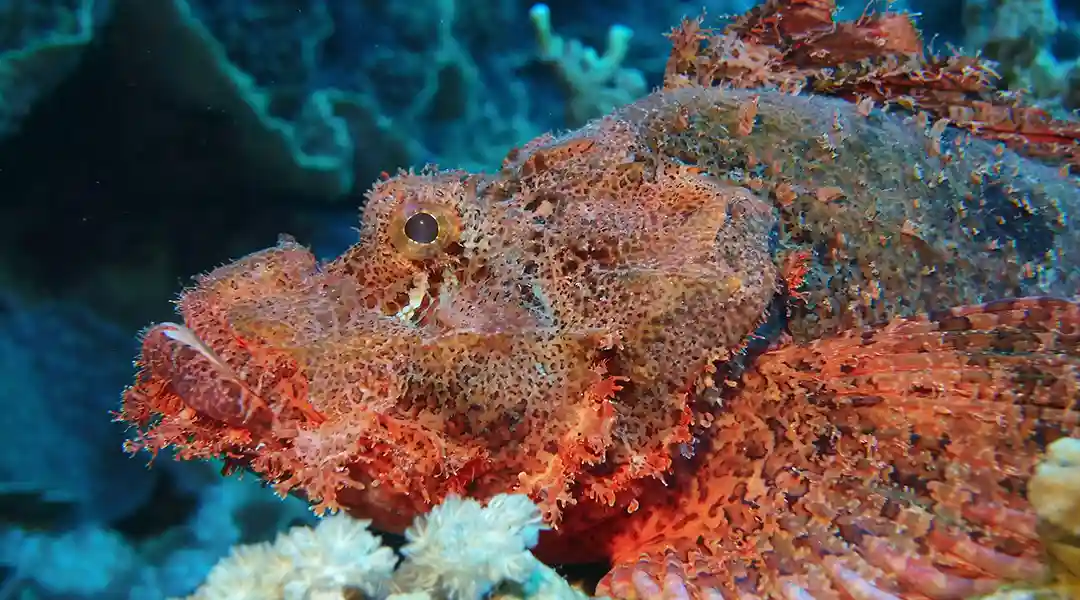
photo: Jakub Miovsky
(Scorpaena plumieri)
The master of camouflage. You will often swim right past it without noticing, so learn to sharpen your eyes.
How to identify it: Mottled brown, red, and white, with a body covered in skin flaps that mimic algae and rocks.
Safety Tip: It has venomous spines on its dorsal fins. It is a benthic fish (living on the bottom) and very calm, but never lean on rocks or coral without looking first!
Nassau Grouper
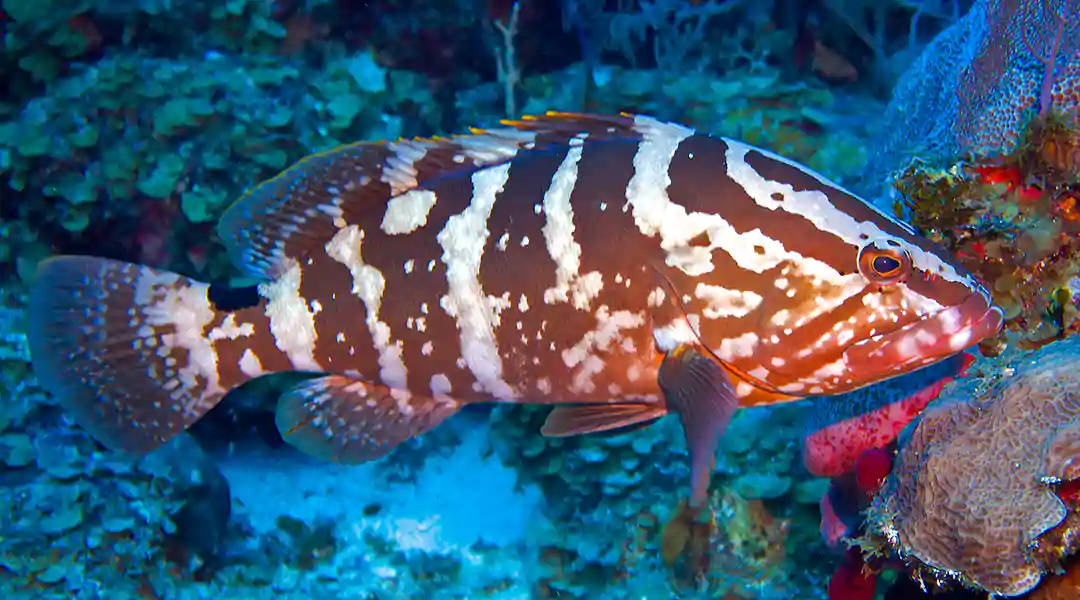
photo: Jeff Mitton
(Epinephelus striatus)
This is, without a doubt, the ambassador of reef diving in the Caribbean. Seeing a large grouper is an experience that commands instant respect.
How to identify it: Robust body, large head, and a prominent lower jaw. Its color is usually pale tan with dark vertical bars and a distinctive dark spot at the base of the tail.
Fun fact: They are very territorial and long-lived animals. In protected areas like the Cozumel Reefs National Park, groupers are used to divers and can be quite curious, though we must always avoid physical contact.
Lionfish
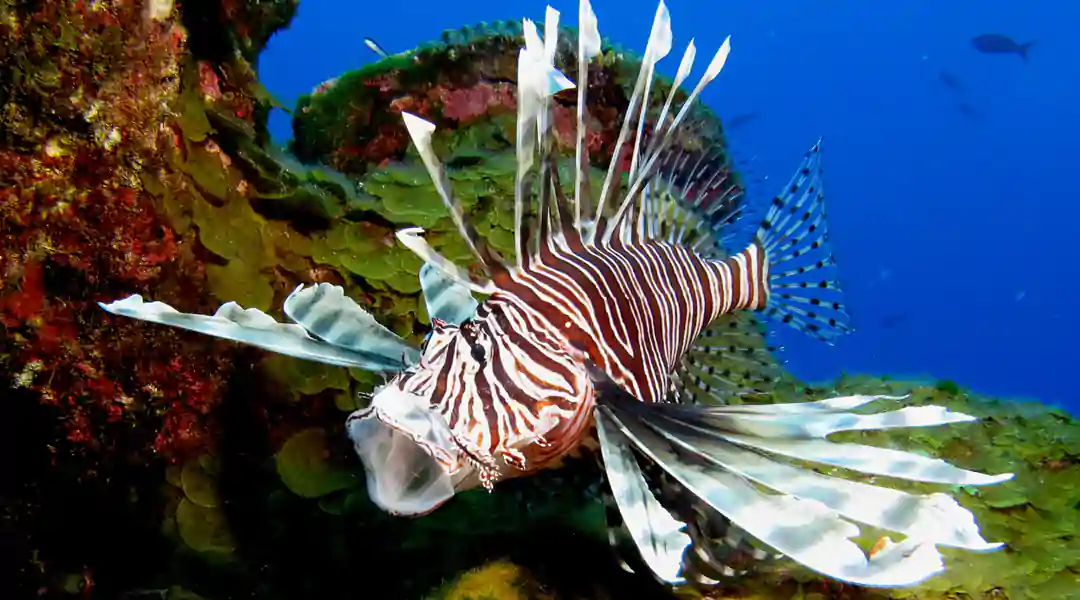
photo: FGBNMS A. Sterne
(Pterois volitans)
With their dramatic, fan-like fins and striking striped bodies, they are as captivating as they are controversial—and a major invasive species across the Caribbean.
How to identify it: Elongated venomous spines, beautiful white and reddish-brown stripes, and fan-shaped pectoral fins that make them instantly recognizable despite being out of their native habitat.
Conservation: Because they have virtually no natural predators in the Caribbean, they reproduce rapidly and can heavily impact native reef fish. Divers often spot them hovering near reef structures, ledges, and small caves.
Seagrass meadows and sandy bottoms
Turtle grass (Thalassia testudinum) is the nursery of the Caribbean. These submerged meadows and the sandy flats around them are home to more slender and colorful species.
French Grunt
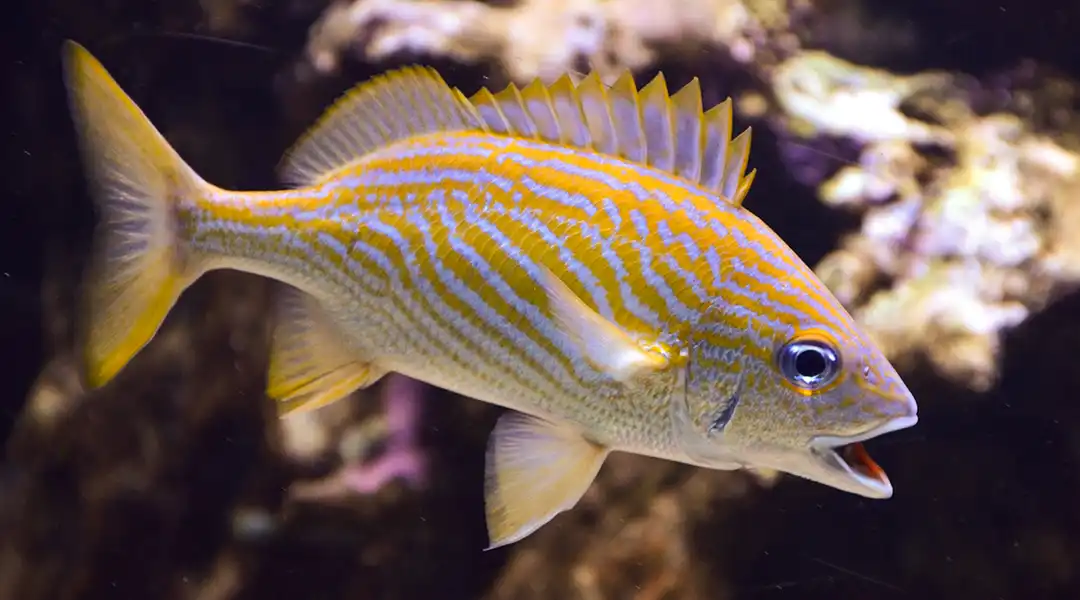
photo: Vassil
(Haemulon flavolineatum)
Those schools of silvery fish with bright yellow stripes hovering in clouds around the coral heads are grunts.
How to identify it: Small and silvery, with narrow yellow horizontal stripes and a yellow tail. By night they leave the reef to feed on the nearby seagrass.
Pro Tip: These are among the most common fish you will see on your dives in shallow water, making them a favorite for snorkelers as well.
Southern Stingray
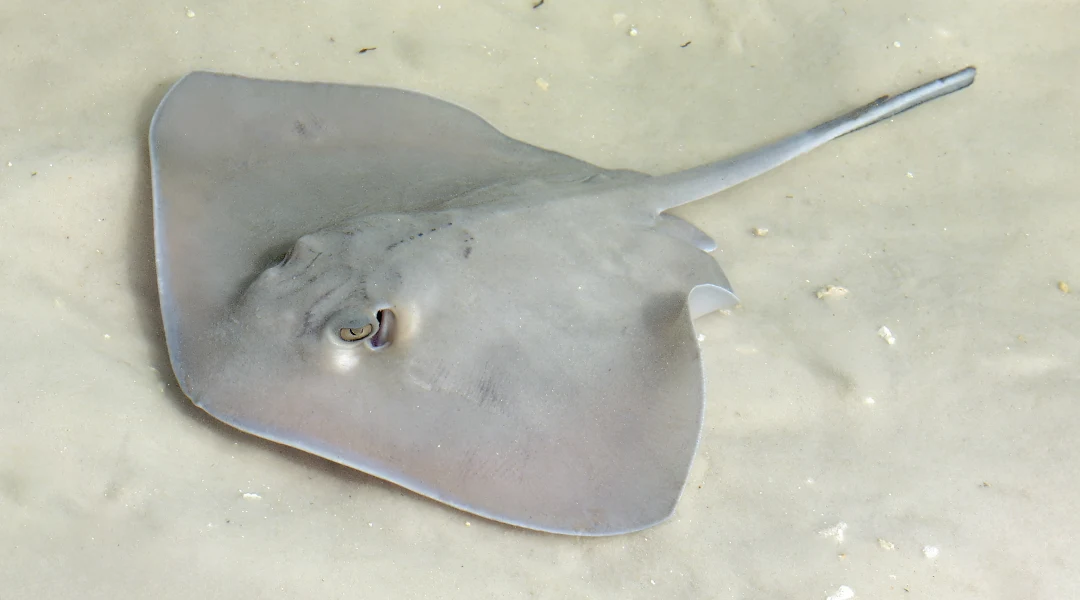
photo: Jacob Robertson
(Hypanus americanus)
Easily recognizable by its flat, graceful glide over the sandy floor. Often found burried in the sand…
How to identify it: A diamond-shaped, grey-brown body with a long whip-like tail. Its stinger is a defense mechanism, so it is best to admire it from a distance.
Behavior: You will often see other fish (like jacks and wrasses) following the stingray to catch small organisms stirred up as it digs.
Visitors from the blue: pelagic and passing species
Not everything happens near the bottom. Sometimes, looking up toward the surface or out into the open sea reveals pelagic species.
Great Barracuda
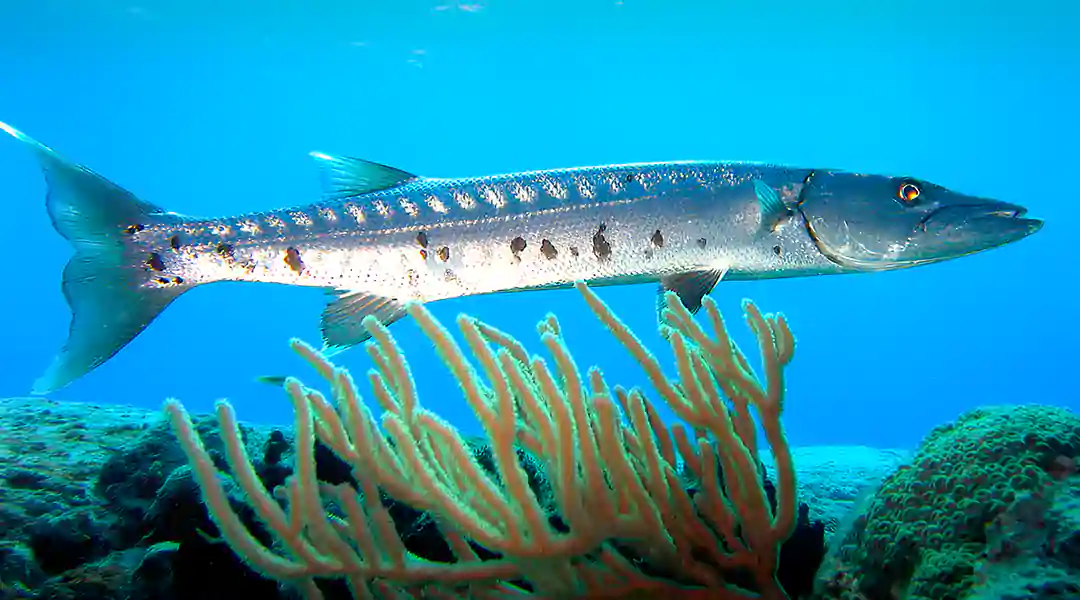
photo: Laban712
(Sphyraena barracuda)
Seeing a barracuda hang motionless in the blue, with its silver body catching the light, is one of the most striking sights in diving.
How to identify it: A very long, hydrodynamic body with a mouth full of sharp teeth and a silvery color with dark blotches on the sides.
Where to find them: They are common around reefs, current points, and wrecks. They are harmless to divers who keep a calm distance and incredibly photogenic.
Spotted Eagle Ray
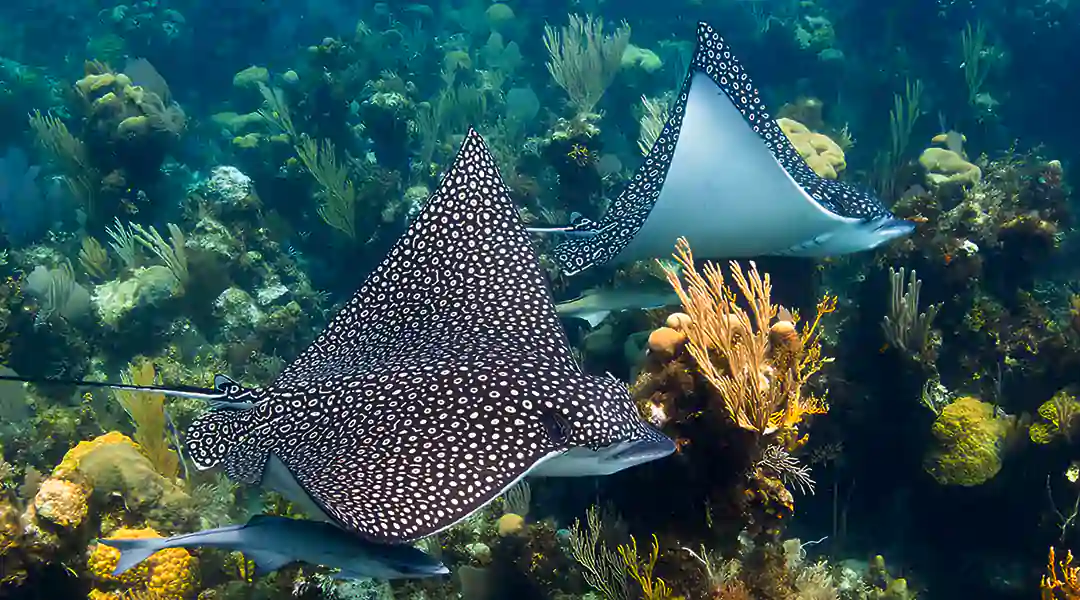
photo: Andy Murch
(Aetobatus narinari)
Eagle rays are the aerial acrobats of the sea; they glide along the reef edge like birds on the wing. Their snout is easy to mistake for a mouth, but the actual mouth is underneath the head.
How to identify it: A dark body covered in white spots, a duck-like snout, and a very long tail.
Observation: If you stay calm and keep your bubbles under control, you may be lucky enough to see one cruising past in the blue.
Quick identification guide by color and shape
To help you on your next adventure, we have prepared this quick list to classify the fish you will see on your dives:
- Silvery with stripes or bars: Sergeant majors, grunts, and snappers.
- Multicolored and slender: Stoplight parrotfish (Sparisoma viride) and wrasses. They are very active, and you can sometimes hear the parrotfish crunching on the reef.
- Reddish and static on the bottom: Scorpionfish and Squirrelfish.
- Large, dark, and solitary: Groupers and Nurse sharks resting under ledges.
- Snake-like: Moray Eels (usually only their heads poke out from crevices) and Trumpetfish.
Tips to improve your marine life sightings
It’s not just about going down and looking; a good marine observer follows certain patterns:
- Control your breathing: Bubbles and noise scare fish. Calm, deep breathing makes you appear less threatening.
- Slow movements: Avoid waving your hands. Fish detect vibrations in the water through their lateral line. If you move like part of the current, they will accept you into their environment.
- Use a torch: Even during the day, a small dive light helps bring back the red colors in deep cracks, revealing hidden scorpionfish or shrimp.
- Consult guides after the dive: Always have a local fish ID guide handy. Writing down what you saw in your logbook is the best way to memorize the names.
Responsible diving: protecting what we love
The Mexican Caribbean is home to several Marine Protected Areas. These spaces are vital because they act as “nurseries” for life. Places like the Cozumel Reefs National Park or the Puerto Morelos Reef National Park are prime examples of how protection allows the most common fish you will see on your dives to reach spectacular sizes.
By choosing dive centers that respect regulations and promote environmental education, you are directly contributing to the health of our oceans. Training is key: a Fish Identification or Underwater Naturalist course will forever change how you view the ocean.
Your adventure begins underwater
Fish identification is a skill that is polished with time and curiosity. Every dive is a new opportunity to discover a behavior you haven’t seen before or a species that had previously eluded you. The most common fish you will see on your dives are the foundation of an ecosystem that grants us peace, beauty, and knowledge.
If you want to live this experience in a professional, fun, and safe way, join us at Pasku Dive. We don’t just take you to the best dive sites on our Playa del Carmen reef dives and in Cozumel; our guides will help you name all that life teeming beneath the surface, ensuring every outing is a live lesson in nature.
Are you ready to meet your underwater neighbors? Don’t wait any longer to explore the treasures hidden along our coast. Book your next diveBook your next dive and start ticking species off your list. The blue is waiting for you!