Menu
Can you dive in cenotes as an Open Water Diver?
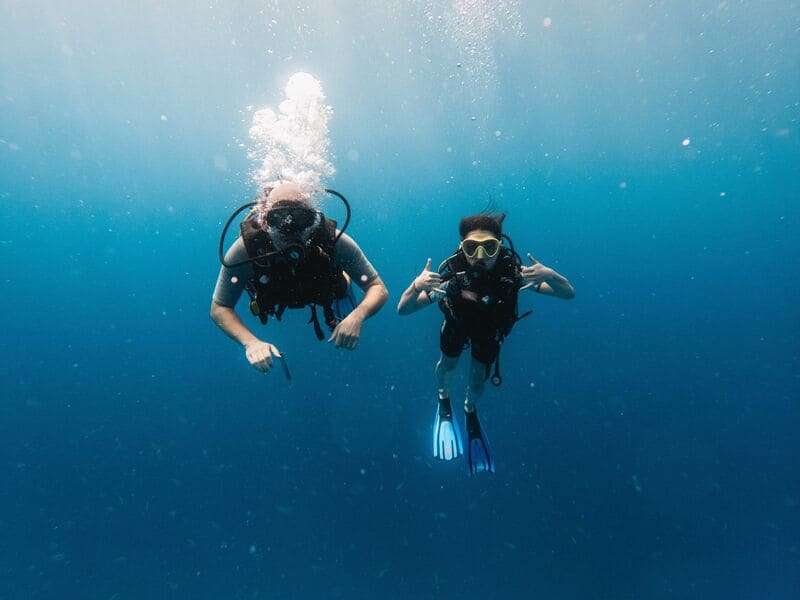
If you are planning a scuba trip to Playa del Carmen or the wider Riviera Maya, you’ve probably seen breathtaking photos of Mexico’s famous cenotes. These mystical, crystal-clear freshwater sinkholes look like something out of a fantasy movie. Sunlight beams piercing through turquoise water, ancient stalactites hanging from the ceilings, and visibility that seems to stretch on forever.
But if you are a newly certified Open Water Diver (OWD), or if you only dive a few times a year on vacation, a sudden wave of doubt might hit you:
“Are cenotes safe for a beginner? Don’t you need a technical, cave-diving certification to go inside them? Am I going to get lost in the dark?”
Let’s cut straight to the chase: Yes, you absolutely can dive in the cenotes as an Open Water Diver.
However, there is a massive catch. To do it safely and enjoyably, you need to understand the golden rule of Mexican sinkholes: the crucial difference between Cavern Diving and Cave Diving.
Here is everything you need to know as an Open Water Diver to experience this bucket-list adventure without the anxiety.
The Golden Rule: Cavern Diving vs. Cave Diving
The biggest misconception among recreational divers is that entering a cenote means “cave diving.” It doesn’t. In the scuba world, underwater overhead environments are strictly divided into two categories.
Understanding this distinction is what keeps you completely safe.
1. Cavern Diving (Recreational & Open Water Friendly)
This is where you will be diving. A cavern dive is defined as an exploration of an overhead environment where natural sunlight is always visible.
The Daylight Rule: If you turn off your dive light, you should still see the blue glow of the exit. You are never in total pitch-black darkness.
Proximity to Safety: You are restricted to a maximum linear distance of 60 meters (200 feet) from the nearest open surface.
No Restrictions: The passages are wide and spacious. You will never have to squeeze through tight spaces where two divers cannot pass each other easily.
Guiding Limits: Local regulations mandate a maximum ratio of 4 divers per certified Full Cave Guide.
Because of these strict safety parameters, the world’s major scuba agencies (PADI, SDI, SSI) clear Open Water Divers to participate in cavern tours, provided they are accompanied by a professional local guide.
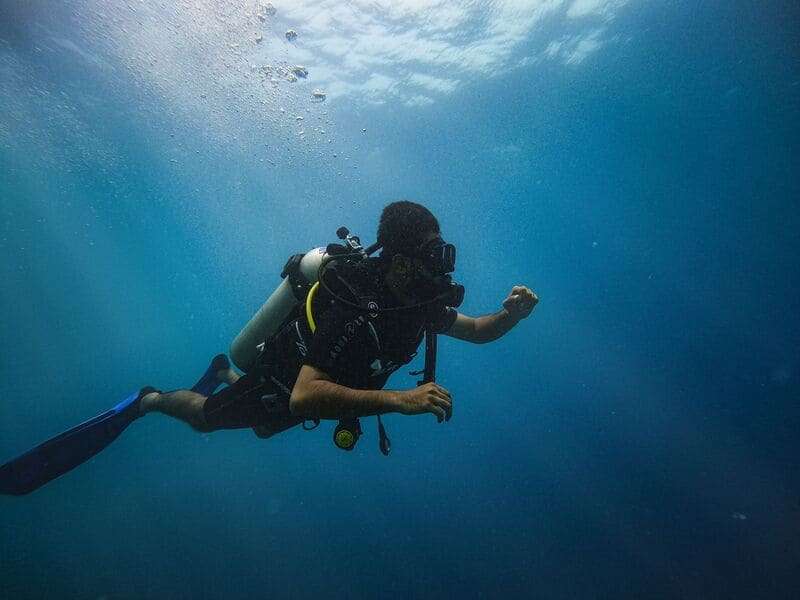
2. Cave Diving (Strictly Technical)
This is an entirely different sport. Cave diving goes deep into the subterranean grid, far beyond the reach of natural light.
Total Darkness: If your lights fail, you are in absolute blackness.
Complex Navigation: It requires specialized gas management, redundant equipment (like twin tanks or sidemount setups), and years of technical training.
No Direct Ascent: You cannot simply swim up if you panic.
As an Open Water Diver on a guided tour, you will never enter the cave zone. Your guide will navigate along a permanent, highly visible yellow or white guideline that keeps you strictly within the safe cavern boundaries.
Quick Comparison: Ocean vs. Cenote Cavern Diving
If you’ve only ever dived in the ocean, your first cenote dive will feel like a different planet. Here is a quick look at what changes when you swap saltwater for freshwater:
| Feature | Ocean Diving (Caribbeann Sea) | Cenote Cavern Diving |
| Water Type | Saltwater (High buoyancy) | Freshwater (Lower buoyancy – you need less weight!) |
| Visibility | 20 to 30 meters (Good) | 60+ meters (Unmatched, feels like flying through air) |
| Currents | Possible drift and waves | Zero current, perfectly calm |
| Temperature | 26°C to 29°C (Warm) | Constant 24°C year-round (a 5mm wetsuit is recommended) |
| What You See | Coral, turtles, colorful fish | Rock formations, haloclines, light beams |
The Hidden Phenomenon: What on Earth is a Halocline?
During your cavern briefing, your guide will mention a word that sounds highly scientific: a halocline.
Because cenotes are connected to the ocean via underground rivers, fresh rainwater sits directly on top of heavier, denser saltwater. Where these two layers meet, they don’t mix immediately. Instead, they form a distinct boundary line.
When you swim through a halocline, the water suddenly looks like oil mixing with water—it becomes blurry, almost like looking through a greased window. The moment you drop a foot below or rise a foot above it, the water becomes instantly crystal clear again. It is a surreal, mesmerizing visual effect that you can only experience in places like the Riviera Maya.
3 Perfect Beginner Cenotes for Open Water Divers
Not all cenotes are created equal. Some require advanced buoyancy control because of fragile, tight formations, while others are essentially massive open-air swimming pools with wide underground rooms.
If you are an Open Water Diver, these three sites offer maximum safety, easy entries, and mind-blowing views.
1. Cenote Dos Ojos (The “Two Eyes”)
Located between Playa del Carmen and Tulum, Dos Ojos is arguably the most famous cavern system in the world for a reason. It is divided into two distinct routes: the Barbie Line and the Bat Cave Line.
Why it’s perfect for beginners: The cavern spaces are massive, almost like underwater cathedrals. The maximum depth is shallow (around 8 to 9 meters / 26 to 30 feet), meaning your air will last a long time, and you don’t have to worry about deep-water decompression limits.
The Highlight: The Barbie Line offers incredible stalactites and huge amounts of natural light filtering through open openings in the ceiling.
2. Garden of Eden (Cenote Ponderosa)
Located just 20 minutes south of Playa del Carmen, this cenote is shaped like a giant, open-air mangrove pool hidden in the jungle.
Why it’s perfect for beginners: You start the dive in a huge open-water area where you can easily check your weights and get comfortable with your buoyancy before swimming under the cavern ceiling.
The Highlight: The entrance of the cavern features a massive curtain of green and blue light beams. It also has a fantastic, easily accessible halocline layer where you can play with the blurry visual effects.
3. Cenote Casa (Cenote Manatí)
Casa Cenote is unique because it is located in a mangrove forest very close to the ocean. It is an open mangrove channel with an overhead cavern section.
Why it’s perfect for beginners: It feels much more like an open-river dive than an underground cave. You are surrounded by lush mangrove roots, and the natural light is overhead for almost the entire dive.
The Highlight: You get to see how the jungle ecosystem connects with the water. You might spot freshwater crabs, small fish, and if you are lucky, Panchito—the small, harmless local crocodile who hangs out near the surface.
3 Essential Tips for Your First Cenote Experience
To make sure your first freshwater cavern dive feels relaxed and fun, keep these three professional copywriting and diving tips in mind:
Master “The Frog Kick”
In ocean diving, most people use the standard flutter kick (moving your legs up and down). In a cenote, doing this will stir up sediment from the bottom, instantly ruining the visibility for you and the divers behind you. Instead, practice the frog kick (bending your knees and kicking outward like a frog). This pushes the water directly behind you rather than down toward the floor.
Nail Your Buoyancy Before You Go
Because freshwater is less dense than saltwater, you will sink faster with the same amount of weight you use in the ocean. A good guide will help you do a proper weight check at the surface before the dive starts. You will likely need to drop about 2 to 3 kilos (4 to 6 pounds) from your standard ocean weight belt.
Don’t Touch the Formations
The stalactites and stalagmites you see took millions of years to grow, drop by drop. Oils from human skin can stop their growth completely, and a careless kick can snap a thousand-year-old formation in a second. Keep your hands tucked in and enjoy the view with your eyes.
Ready to Trade the Ocean for the Magic of the Underworld?
Diving into a Mexican cenote isn’t about pushing your limits or being a hardcore daredevil. It’s about experiencing total tranquility, floating through water so clear that you feel like you are weightless in outer space.
At Pasku Dive, we don’t believe in crowded, rushed tours where you feel like just another number. We specialize in private and small-group guided experiences tailored exactly to your comfort level, experience, and air consumption.
Whether it is your 10th dive or your 500th, we take the time to run a thorough safety briefing, customize your weighting perfectly, and guide you through the safest, most visually stunning cavern lines in the Riviera Maya.
[Get in touch with us today via WhatsApp or email to book your custom Cenote Tour.] Let’s make your first cavern dive safe, unforgettable, and entirely stress-free!