For certified scuba divers crossing the Atlantic from Spain in search of legendary underwater topography, planning an expedition to the Yucatán Peninsula usually comes with a checklist of meteorological concerns. Unlike open-water destinations where seasonal rains, plankton blooms, or shifting winds can drastically ruin your underwater plans, the subterranean realm of the Mexican jungle operates under an entirely different set of rules. If you are wondering how stellar diving visibility remains across the twelve months of the year, understanding the hydrology of the cenotes will completely change your travel planning.
In this comprehensive, in-depth guide, we will analyze why exceptional diving visibility is a constant year-round reality in the Maya underworld, exploring the science, seasonal variations, and practical tips for every diver eager to experience absolute optical clarity.
The Science Behind Incredible Diving Visibility in Cenotes
To truly appreciate why divers rave about the crystal-clear waters of Quintana Roo, we must first look at the unique geology of the region. The Riviera Maya sits on a vast, porous limestone shelf with virtually no surface rivers.
- Natural Filtration: When tropical rains fall over the dense jungle, the water seeps down slowly through hundreds of feet of limestone bedrock. This dense rock acts as a colossal, ultra-fine natural filter, trapping organic debris, sediments, and impurities before the water ever reaches the underground caves.
- Stable Subterranean Environment: Once inside the flooded caverns, the water is protected from wind, waves, surface storms, and direct sunlight algae blooms. This geological shielding ensures that pristine diving visibility—often exceeding 100 meters (over 300 feet)—remains virtually unchanged whether you visit in January or August.
How Seasonal Weather Affects Diving Visibility on the Surface vs. Underground
Many European travelers planning a Caribbean vacation worry about the regional rainy season or tropical storm activity. While coastal ocean sites and barrier reefs can experience reduced clarity following heavy storms or strong wind swells, the underground cave systems maintain their legendary diving visibility through a well-defined hydrological separation.
- Open Sea vs. Cavern Dynamics: On the coast (such as in Playa del Carmen or Cozumel), rough weather can stir up sand and organic matter, temporarily impacting ocean conditions. However, a few miles inland, the cenotes remain sheltered inside the limestone matrix.
- The Exception: Heavy Rains and Tannins: During intense tropical downpours in the wet season, some open-air cenotes (cenotes abiertos) might experience a temporary influx of surface runoff carrying organic tannins, which can slightly tint the water a warm amber or tea color. Yet, even during these rare events, overall diving visibility remains astonishingly sharp compared to standard ocean diving anywhere else in the world.
Top Cenotes for Maximum Diving Visibility Throughout the Year
While almost every flooded sinkhole in the Riviera Maya offers breathtaking clarity, certain locations are world-renowned for showcasing mind-blowing diving visibility that defies belief. When local instructors brief you before an immersion, they often highlight specific geological masterpieces:
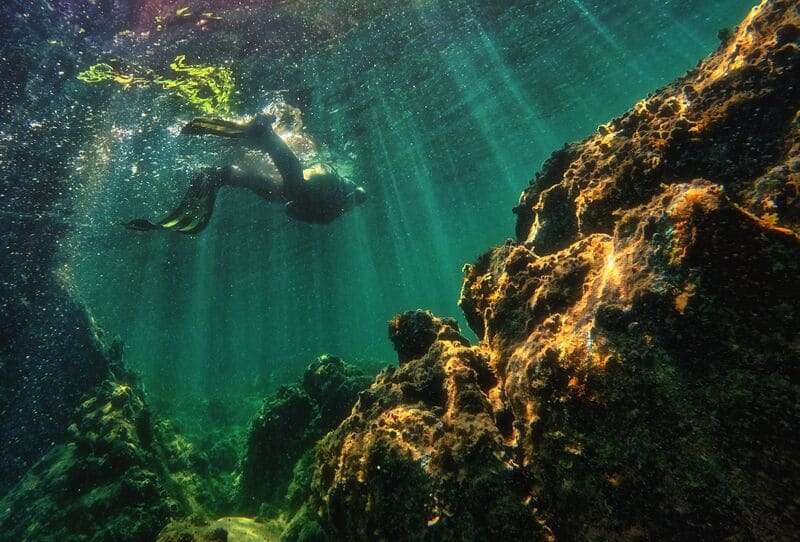
- Cenote El Pit: Plunging deep into the jungle floor, this massive sinkhole features a shaft where sunlight penetrates deep into the abyss. On bright days, the beams of light stretch down past 30 meters, creating a cathedral-like atmosphere where pristine diving visibility allows you to see other divers suspended in mid-air like astronauts in space.
- Cenote Dos Ojos: Famous for its intricate cavern circuits and incredible fossilized seashell walls, its shallow, sunlit water layers offer edge-to-edge transparency that makes underwater photography effortless for both novices and pros.
- Cenote Tajma Ha: Known for its stunning light shows, where sunbeams pierce through roof openings and intersect with underlying halocline layers, providing an unforgettable visual spectacle.
Practical Tips to Protect Diving Visibility During Your Dives
While nature provides crystal-clear water, the human factor plays a massive role in maintaining that pristine environment. Stirring up the delicate silt floor inside a cave or cavern can instantly drop diving visibility from 100 meters to zero in a matter of seconds. To ensure a flawless dive for yourself and the groups following behind you, keep these golden rules in mind:
- Flawless Neutral Buoyancy: Because fresh water and salt water layers meet inside many cenotes, subtle density shifts can catch careless divers off guard. Practicing precise buoyancy control prevents you from kicking up fragile bottom sediment.
- Streamlined Equipment: Keep all hoses, gauges, and accessories neatly tucked away to avoid dragging equipment along limestone formations or stirring up particulate matter.
- Mindful Fin Kicks: Traditional flutter kicks can generate upward currents that lift fine silt from the floor. Using frog kicks or modified helicopter turns helps preserve maximum diving visibility for everyone in your team.
Planning Your Trip from Spain: Timing and Logistics
For divers traveling from Spain, organizing a bucket-list trip to Mexico requires balancing flight schedules, gear preparation, and local operator choices.
- No Bad Time to Visit: Because diving visibility is consistently spectacular year-round, you do not need to restrict your travel dates to a specific dry-season window. Summer months offer warmer weather and fewer tourist crowds in the cenotes, while winter months bring exciting pelagic encounters out in the open ocean.
- Certified Guidance: Always dive with certified cavern or cave guides who know the specific topography, strict conservation rules, and lighting protocols of each site.
Dive Into Crystal-Clear Subterranean Wonders
Understanding why stellar diving visibility is a constant reality in Mexico’s cenotes highlights why the Yucatán Peninsula is considered one of the ultimate scuba meccas on Earth. Floating through ancient, light-filled chambers where water clarity makes walls and stalactites seem to hover in thin air is an experience that stays with every diver for a lifetime.
True wonder often lies hidden just beneath the surface, waiting for those who approach nature with quiet respect, curiosity, and a desire to explore responsibly.
If this guide has inspired you to book your next transatlantic scuba adventure and you want to plan your cenote immersions with expert local professionals who guarantee safety, small groups, and unforgettable experiences, we strongly recommend exploring the specialized itineraries at paskudive.com.