
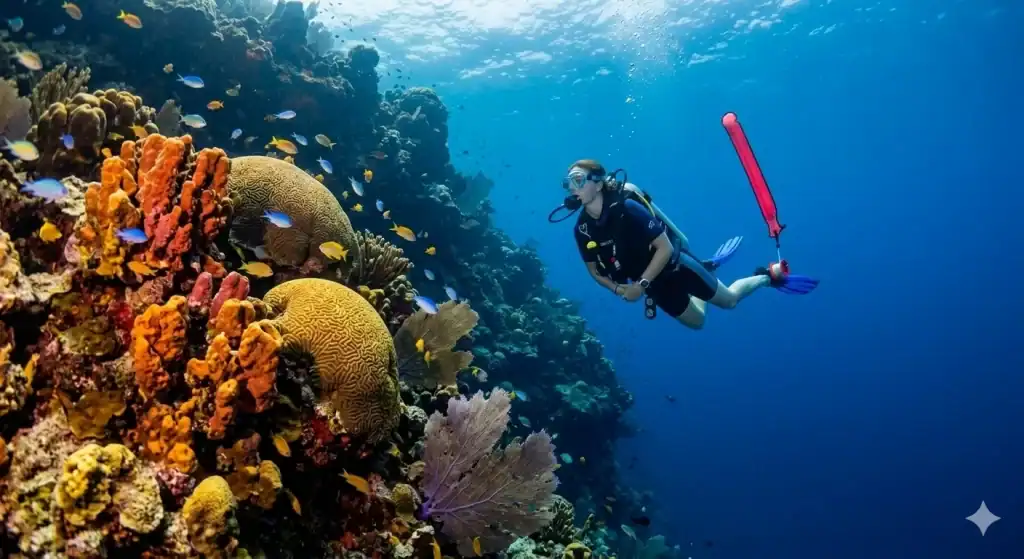
If you are a diving enthusiast living in Spain, you have likely spent your summers exploring the rugged beauty of the Costa Brava, the crystal-clear depths of Formentera, or the volcanic formations of El Hierro. However, there comes a time in every diver’s life when the Mediterranean cravings transform into a desire for something tropical, vibrant, and drift-heavy. When that moment arrives, Diving in Cozumel Mexico stands out as the ultimate pilgrimage.
Cozumel is not just another Caribbean island; it is a limestone gem anchored in the Mesoamerican Barrier Reef—the second-largest reef system in the world. For Spanish travelers, making the jump across the Atlantic to Cancun and then taking the ferry to “Cozum” is more than a holiday; it’s an immersion into a world where the visibility often exceeds 30 meters and the water temperature makes your 7mm semi-dry suit look like an ancient relic. In this comprehensive guide, we will explore why this island is the “Mecca” of the Caribbean and how you can plan the perfect trip from a Spanish perspective.
Why Diving in Cozumel Mexico is a Bucket List Experience
When we talk about Diving in Cozumel Mexico, we are talking about a National Marine Park that has been protected since the 1990s. This protection has allowed the coral structures to remain remarkably healthy and the fish populations to thrive. Unlike some spots in the Mediterranean where you have to hunt for small nudibranchs (which we love!), in Cozumel, the “big stuff” and the “color” come to you.
The Phenomenon of Drift Diving
Cozumel is world-famous for its drift diving. Because of the island’s location, a constant current flows from south to north along the leeward side. For a diver, this is the ultimate luxury. You simply roll off the boat, find your buoyancy, and let the ocean do the walking. It feels like flying over a submerged garden. This is a stark contrast to the effort sometimes required to navigate the currents in the Strait of Gibraltar or the Atlantic coast of Galicia.
Visibility and Temperature: The “Piscina” Effect
Spanish divers used to the thermoclines of the Med will find Cozumel’s conditions almost surreal.
- Visibility: Often ranges from 25 to 40 meters.
- Temperature: Stays between 26°C in the winter and 29°C in the summer. A simple 3mm shorty or even just a rash guard is usually enough, allowing for a level of freedom of movement that is hard to find back home.
Top Sites for Diving in Cozumel Mexico
The island offers over 30 established dive sites, most of which are located within the Arrecifes de Cozumel National Park. Depending on your experience level—whether you are a “Buceador de Una Estrella” (CMAS) or a PADI Rescue Diver—there is a wall or a shallow reef for you.
Palancar Reef: The Crown Jewel
Palancar is not just one site; it’s a series of reefs (Palancar Gardens, Horseshoe, Caves, and Bricks) that stretch for miles. It is famous for its towering coral pinnacles and deep swim-throughs.
- What to expect: Massive barrel sponges, hawksbill turtles, and sunlight filtering through limestone arches. It is the quintessential image of Diving in Cozumel Mexico.
Santa Rosa Wall
For those who love the abyss, Santa Rosa offers a dramatic drop-off. You drift along a vertical wall that plunges hundreds of meters into the deep blue. The wall is honeycombed with tunnels and caves draped in oversized sponges and fans.
Columbia Deep
Similar to Palancar but often less crowded, Columbia Deep features enormous coral structures and is a prime spot to see larger pelagics, such as eagle rays or the occasional reef shark patrolling the edge of the drop-off.
El Cielo: The Starfish Sanctuary
While not a “deep dive,” El Cielo (The Heaven) is a shallow sandbar perfect for a third tank or a snorkeling break. It is world-renowned for its thousands of giant starfish resting on the white sandy bottom.
Unique Species: The Splendid Toadfish
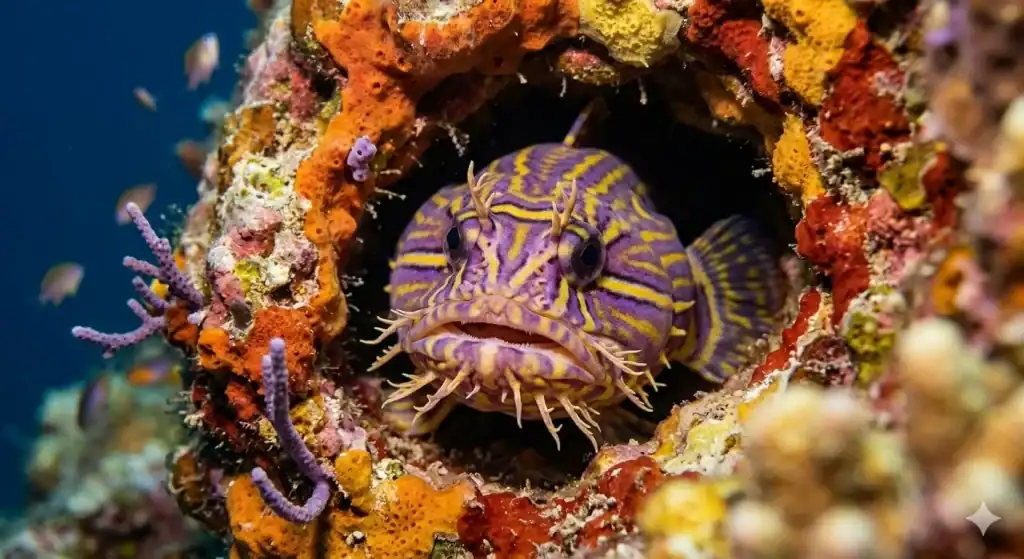
One of the most compelling reasons for Diving in Cozumel Mexico is the chance to see a fish that exists nowhere else on Earth: the Splendid Toadfish (Sanopus splendidus). Endemic to the reefs of Cozumel, this fish is a marvel of evolution. With its vibrant purple stripes, yellow fins, and “whiskers,” it lives in small crevices under the coral. Finding one is a rite of passage for any visiting diver, and local guides are experts at spotting their grumpy faces peeking out from the reef.
Logistics: Planning Your Trip from Spain
Travelling from Spain to Mexico is relatively straightforward, but as seasoned travelers, we know the “tricks” to make the journey smoother.
Getting There: Madrid/Barcelona to Cozumel
Most Spanish divers fly from Madrid (Barajas) or Barcelona (El Prat) directly to Cancun (CUN). Airlines like Iberojet, World2fly, and Air Europa offer competitive direct flights.
- From Cancun Airport: Take the ADO bus (the “Alsa” of Mexico—very reliable and comfortable) to Playa del Carmen.
- The Ferry: From the Playa del Carmen pier, catch the ferry (Ultramar or Winjet) for a 40-minute ride to Cozumel.
Pro tip: If you have a layover in the US, remember you need an ESTA, even for just a few hours in the airport!
When to Go
- Winter (November to March): Peak season. The weather is dry and pleasant. This is also Eagle Ray season, where you can see groups of these majestic creatures gliding in the current.
- Summer (June to August): The water is at its warmest, but it can be humid. It is also hurricane season, though modern forecasting makes it very safe to plan around.
Customs and Currency
In Mexico, the currency is the Mexican Peso ($), but US Dollars are widely accepted. For Spaniards, the exchange rate usually works in our favor. Don’t forget to bring a “Minitel” or a universal adapter, as Mexico uses Type A and B plugs (flat pins), unlike our Euro-plugs.
Safety and Environmental Regulations for Diving in Cozumel Mexico
As divers from a country with strictly regulated Marine Reserves (like Islas Columbretes or Tabarca), we appreciate the rules that keep the ocean healthy. Cozumel takes its conservation seriously.
- Biodegradable Sunscreen Only: Or better yet, use a UV-protection shirt (rash guard) to avoid getting chemicals in the water.
- No Gloves Policy: To discourage divers from touching the coral, the use of gloves is generally prohibited within the National Park.
- The “Sargazo” Issue: While Cozumel’s western side (where the diving happens) is usually protected from the seaweed blooms that affect Playa del Carmen or Tulum, it’s always good to check local reports.
Diving Equipment: What to Pack?
While you can rent everything on the island, most of us prefer our own gear. If you are Diving in Cozumel Mexico, here is what I recommend:
- Computer: Essential for multi-level drift diving.
- SMB (Surface Marker Buoy): In Cozumel, this is non-negotiable. Because of the currents and boat traffic, you must be able to deploy a “sausage” at the end of every dive.
- Lightweight 3mm Suit: Even if the water is 28°C, after three dives a day, you will feel the chill.
- Insurance: Make sure your DAN Europe or Federative Insurance (like the one from FEDAS) is active and covers international waters.
Beyond the Reef: What to do in Cozumel
The Spanish “sobremesa” culture fits perfectly with the Cozumel lifestyle. After your morning dives, the island offers plenty of ways to relax.
- Rent a “Vocho”: Renting an old Volkswagen Beetle is a classic Cozumel experience. Drive around the uninhabited “Wild Side” of the island to see the crashing waves of the Atlantic.
- San Miguel: Walk through the main town, enjoy some authentic Cochinita Pibil, and enjoy the sunset from the “Malecón.”
- Mayan Ruins: Visit San Gervasio to pay your respects to Ixchel, the goddess of fertility and the moon.
Professional Training and Expert Guidance
Whether you are looking to complete your Open Water Diver course in crystal-clear water or you want to specialize in Nitrox (highly recommended for Cozumel to extend your bottom times on the walls), choosing the right center is key.
If you want a bridge between the Riviera Maya mainland and the island’s best spots, I highly recommend checking out Pasku Dive. They are experts in the region and can help organize your underwater adventures with a level of professionalism and safety that Spanish divers expect. Their knowledge of the local currents and hidden spots in the National Park ensures that your experience of Diving in Cozumel Mexico is not just good, but legendary.
Why Cozumel Stays in Your Heart
Diving in Cozumel Mexico is more than just ticking a box on a list of world-class dive sites. It is the feeling of weightlessness as you fly over the Santa Rosa Wall, the thrill of spotting a Splendid Toadfish, and the camaraderie of sharing tacos and stories with fellow divers as the sun dips below the Caribbean horizon.
For the Spanish diver, Cozumel offers a perfect blend of high-voltage diving and a culture that feels surprisingly familiar—warm, welcoming, and deeply connected to the sea. It is a reminder that while our Mediterranean is the “cradle of civilization,” the Caribbean is the vibrant, pulsing heart of the underwater world.
Your Next Step to Paradise
Are you ready to swap the cold Atlantic currents for the warm embrace of the Mexican Caribbean? Don’t leave your adventure to chance. For personalized service, top-tier safety, and a diving experience that feels like it was designed just for you, visit Pasku Dive today.
Book your trip, pack your mask, and get ready to discover why Cozumel is the ultimate diving destination. The reef is waiting for you!