
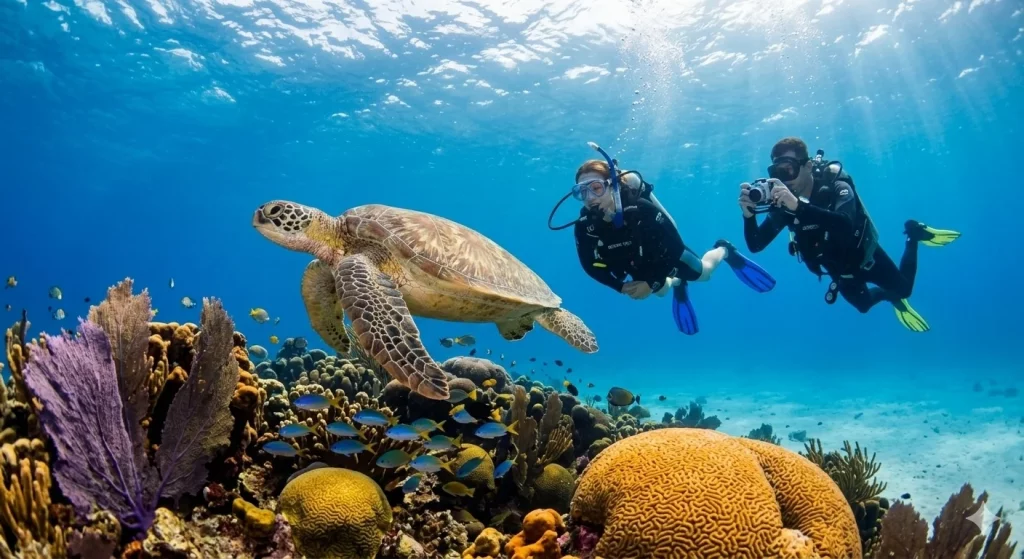
Why choose scuba diving in Playa del Carmen, Mexico for your next vacation?
- The Halocline: The precise layer where surface freshwater meets deeper saltwater. Because they don’t mix immediately, it creates a blurry, mesmerizing visual effect—as if diving through a mirage or gelatin.
- Light effects: Sunbeams filtering through the jungle canopy illuminate submerged stalactites and stalagmites, creating light plays that are every photographer’s dream.
- Geological formations: Marvel at limestone structures that took millennia to form drop by drop before the caves flooded after the last ice age.
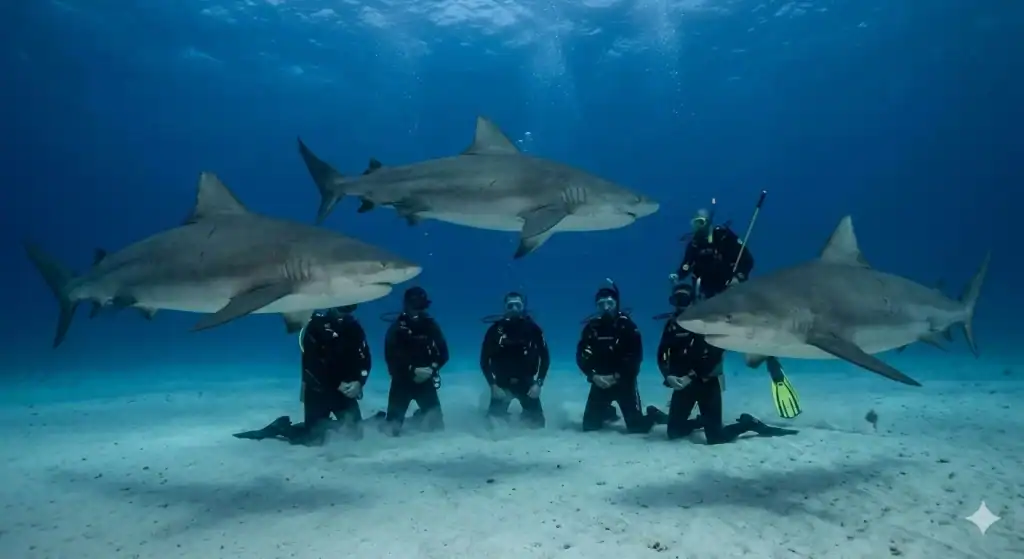
Fascinating Encounters: Marine Life in Scuba Diving Playa del Carmen, Mexico
The Majestic Bull Shark
Turtles, Eagle Rays, and Macro Life
Planning Your Trip from Spain: Tips for Scuba Diving Playa del Carmen, Mexico
Flights, Transfers, and Jet Lag
Diving Certifications and Luggage
- Bring your equipment: If you have your own regulator, dive computer, and mask, always bring them with you in your carry-on luggage. Fins and BCD (buoyancy compensator) can be checked.
- Rent there: If you prefer to travel light, quality dive centers in Playa del Carmen have rental equipment from top brands (Scubapro, Cressi, Mares) in perfect condition.
Dive Insurance: Your Best Ally
Pasku Dive: Your Trusted Center for Scuba Diving Playa del Carmen, Mexico
- Friendly treatment in your language: Sometimes, when we travel abroad, it’s appreciated to be in a familiar environment where they understand you perfectly, share your jokes, and explain briefings with total clarity.
- Small groups: Forget about being on an overcrowded boat with 20 divers where you’re just a number. At Pasku Dive they prioritize personalized attention. Especially in cenotes, where by regulation and safety the maximum ratio is 4 divers per guide.
- Safety and quality standards: All rental equipment is scrupulously maintained, tanks are inspected, and guides know every corner of the reef and every cave like the back of their hand.
- Flexibility and custom packages: Whether you want to do an introductory course (Open Water) under the warm Caribbean sun, or you’re looking for an advanced diving package that combines bull sharks, deep reefs, and spectacular cenotes, they’ll create the perfect itinerary for you.
The Sea is Calling You
Close your eyes for a moment. Imagine leaving behind the cold winter of the Iberian Peninsula, taking a direct flight from Madrid or Barcelona, and landing right in the heart of a tropical paradise. If you’re passionate about the underwater world, you know perfectly well that when planning an unforgettable scuba diving trip, Playa del Carmen, Mexico is always one of the first destinations that comes to mind. And for good reason.
Located in the heart of the Riviera Maya, this vibrant city offers not only beach bars, pastor tacos, and margaritas by the sea—it is, literally, the gateway to one of the most spectacular and diverse underwater ecosystems on the planet. While along Spain’s coasts, from the Costa Brava to Cabo de Palos, we enjoy incredible dive sites that are often cold and demanding, diving in the Mexican Caribbean means comfort, near-limitless visibility, and biodiversity that will leave you speechless. In this article, we’ll break down exactly why you should pack your bags, prep your regulator, and embark on the adventure of a lifetime.
Why choose scuba diving in Playa del Carmen, Mexico for your next vacation?
When Spanish divers seek an international destination, we tend to be particular. We want warm waters, solid logistics, and—above all—dives worth crossing the pond for. The diving scene in Playa del Carmen, Mexico exceeds all these expectations, delivering an unparalleled experience that blends the vastness of the ocean with the mysteries of the Maya jungle.
The world’s second-largest coral reef system
Just off the coast of Playa del Carmen stretches the Mesoamerican Barrier Reef System—a natural wonder surpassed in size only by Australia’s Great Barrier Reef. This ecosystem is home to hundreds of species of hard and soft corals, giant sponges, and an abundance of marine life that feels straight out of a documentary. Unlike dives in the Mediterranean or the Cantabrian Sea, here you’ll enjoy classic Caribbean-style diving (drift diving), where gentle currents carry you effortlessly along the reef while you focus solely on maintaining neutral buoyancy and soaking in the scenery.
Ideal water temperatures and conditions year-round
Forget squeezing into a 7mm wetsuit or dry suit. One of the greatest advantages of this Caribbean gem is its water temperature, which ranges from 26°C (79°F) in winter to 29°C (84°F) in summer. With a shorty or a 3mm wetsuit, you’ll stay perfectly comfortable. Visibility rarely drops below 20–30 meters, making this destination ideal for beginners pursuing certification and seasoned underwater photographers alike.
Unique diving experiences in Playa del Carmen, Mexico: From sea to jungle
The true magic of this destination lies in its extraordinary variety. Nowhere else on Earth lets you dive with sharks in the open ocean in the morning and float inside a millennia-old cavern deep in the jungle by afternoon. The diving offerings in Playa del Carmen are so vast, you’d need months to explore them all.
Vibrant reefs in the Caribbean Sea
Local shore dives are incredibly convenient. Boat rides rarely exceed 10–15 minutes—perfect if you’re prone to seasickness. Sites like Jardines, Moc Che, and Tortugas feature coral walls teeming with life. It’s common to encounter large green morays, schools of surgeonfish, angelfish, lobsters, and, of course, friendly hawksbill turtles grazing peacefully on bottom sponges.
The magic of the cenotes: A dive experience you won’t find in Spain
If one thing sets the Yucatán Peninsula apart from anywhere else on Earth, it’s the cenotes. These are flooded underground cave systems formed millions of years ago, revered by the ancient Maya as entrances to the underworld (Xibalbá).
Diving in a cenote is an almost mystical experience. You’ll float in freshwater so crystal clear it feels like levitating in midair. You don’t need to be a technical cave diver (Full Cave certified); with a recreational certification (Advanced Open Water or even Open Water Diver, depending on the cenote), you can enjoy cavern diving—as long as you’re accompanied by a certified guide and remain within the naturally lit zone.
Phenomena in the cenotes that will leave you speechless include:
– **The Halocline**: The precise layer where surface freshwater meets deeper saltwater. Because they don’t mix immediately, it creates a blurry, mesmerizing visual effect—as if diving through a mirage or gelatin.
– **Light effects**: Sunbeams filtering through the jungle canopy illuminate submerged stalactites and stalagmites, creating light plays that are every photographer’s dream.
– **Geological formations**: Marvel at limestone structures that took millennia to form drop by drop before the caves flooded after the last ice age.
Must-visit cenotes include Dos Ojos, El Pit, Tajma Ha, and Angelita.
Encuentros fascinantes: Fauna marina en el buceo playa del carmen méxico
Si te va la adrenalina y la vida salvaje en su estado más puro, la temporada de invierno es tu momento. El catálogo de vida pelágica que ofrece el buceo playa del carmen méxico atrae a buceadores y biólogos marinos de toda Europa.
El majestuoso Tiburón Toro (Bull Shark)
Cada año, entre los meses de noviembre y marzo, ocurre un fenómeno extraordinario frente a las costas de Playa del Carmen. Decenas de tiburones toro hembra (muchas de ellas embarazadas) se congregan en los arenales a unos 24 metros de profundidad.
Realizar una inmersión con el tiburón toro es una experiencia de humildad y respeto absoluto por el océano. A diferencia de lo que Hollywood nos ha querido vender, estos animales son cautelosos e imponentes. La inmersión se realiza siguiendo estrictos protocolos de seguridad: normalmente es un buceo estático en el fondo arenoso, donde los buceadores se arrodillan y simplemente observan a estas majestuosas criaturas nadar plácidamente a su alrededor. Si tienes experiencia y buena gestión de tu consumo de aire (botella), es algo que recordarás el resto de tu vida.
Tortugas, Rayas Águila y Vida Macro
Pero no todo son depredadores gigantes. En invierno, también es temporada de rayas águila pescadora, que suelen verse “volando” en formación sobre los arrecifes y pecios locales. Además, las corrientes cálidas traen consigo una explosión de vida macro: nudibranquios coloridos, caballitos de mar, cangrejos flecha y peces sapo (frogfish) que se camuflan a la perfección entre las esponjas tubulares. Si eres un fanático del macro, saca tu lupa y tu cámara, porque los guías locales tienen una vista de lince para encontrar estos pequeños tesoros.
Planificando tu viaje desde España: Consejos para el buceo playa del carmen méxico
Organizar una expedición transatlántica puede dar un poco de vértigo al principio, pero viajar a la Riviera Maya desde España es hoy en día más fácil que ir de fin de semana a algunas zonas de la península. Aquí tienes los detalles clave para que tu aventura de buceo playa del carmen méxico salga a la perfección.
Vuelos, traslados y el “Jet Lag”
Desde el aeropuerto Adolfo Suárez Madrid-Barajas, operan varias aerolíneas (como Iberojet, World2Fly o Air Europa) con vuelos directos al Aeropuerto Internacional de Cancún. El vuelo dura unas 10 horas. Mi consejo: intenta dormir en el avión. La diferencia horaria suele ser de 7 horas (menos en México), por lo que aterrizarás por la tarde-noche.
Una vez en Cancún, Playa del Carmen está a tan solo 45-60 minutos por carretera. Puedes coger un autobús directo de la compañía ADO (muy seguros, cómodos y con aire acondicionado que parece el polo norte), o contratar un traslado privado (transfer) que te dejará en la puerta de tu hotel.
Titulaciones de buceo y equipaje
No te preocupes por tu carné de buceador. Ya seas de FEDAS (CMAS), PADI, SSI o cualquier otra certificadora internacional reconocida, tu titulación es perfectamente válida en México. Eso sí, no olvides meter en la maleta tu Logbook (libro de inmersiones) y tu carné físico o digital.
¿Llevar equipo propio o alquilar? * Llevar tu equipo: Si tienes tu propio regulador, ordenador de buceo y máscara, llévalos siempre contigo en el equipaje de mano. Las aletas y el chaleco (BCD) puedes facturarlos.
- Alquilar allí: Si prefieres viajar ligero, los centros de buceo de calidad en Playa del Carmen disponen de equipos de alquiler de primeras marcas (Scubapro, Cressi, Mares) en perfectas condiciones.
Nota técnica para españoles: Recuerda que los enchufes en México son de clavija plana (tipo A/B) y la corriente es de 110V (en España usamos 220V). Tu cargador del móvil, portátil o cámara de fotos funcionará perfectamente porque son bi-voltaje, pero necesitarás comprar un adaptador de clavija en cualquier ferretería o en el mismo aeropuerto.
El seguro de buceo: Tu mejor aliado
Como en cualquier viaje fuera de la Unión Europea (donde nuestra tarjeta sanitaria no sirve de nada), es indispensable viajar con un buen seguro médico y de buceo. Compañías como DAN Europe o seguros especializados en deportes de aventura cubrirán cualquier incidencia, desde un resfriado hasta un hipotético tratamiento en cámara hiperbárica, las cuales, por cierto, están plenamente disponibles y operativas en Playa del Carmen.
Pasku Dive: Tu centro de confianza para el buceo playa del carmen méxico
De nada sirve viajar miles de kilómetros si al llegar caes en manos de un centro de buceo masificado o poco profesional. Para disfrutar con total seguridad y buen rollo, la elección de la escuela es fundamental. Por eso, si buscas la excelencia en el buceo playa del carmen méxico, mi mayor recomendación es que contactes con Pasku Dive.
Puedes echar un vistazo a todo lo que ofrecen en su web: https://paskudive.com/.
¿Por qué elegir Pasku Dive?
- Trato cercano y en tu idioma: A veces, cuando viajamos al extranjero, se agradece estar en un entorno familiar donde te entiendan a la perfección, compartan tus bromas y te expliquen los briefings con total claridad.
- Grupos reducidos: Olvídate de ir en un barco hacinado con 20 buceadores donde eres un simple número. En Pasku Dive priorizan la atención personalizada. Especialmente en los cenotes, donde por normativa y seguridad el ratio máximo es de 4 buceadores por guía.
- Seguridad y estándares de calidad: Todo el equipo de alquiler está escrupulosamente mantenido, los tanques (botellas) están revisados, y los guías conocen cada rincón del arrecife y cada cueva como la palma de su mano.
- Flexibilidad y paquetes a medida: Tanto si quieres hacer un curso de iniciación (Open Water) bajo el cálido sol caribeño, como si buscas un paquete de inmersiones avanzado que combine tiburones toro, arrecifes profundos y cenotes espectaculares, ellos te arman el itinerario perfecto.
El mar te está llamando
El Caribe Mexicano no es solo un destino de pulserita y “todo incluido”. Es la meca de los exploradores submarinos, un lugar de contrastes donde puedes experimentar la ingravidez en medio de una selva milenaria y cruzar miradas con los grandes depredadores del océano. Dejar tu zona de confort en España para sumergirte en estas aguas es una decisión de la que nunca te arrepentirás.
¿Estás listo para dejar de soñar y empezar a soplar burbujas en el paraíso? Entra ahora en https://paskudive.com/, revisa sus opciones de buceo y contacta con ellos para reservar tu plaza. ¡Tus aletas te lo agradecerán y te aseguro que volverás a casa con anécdotas para toda la vida!